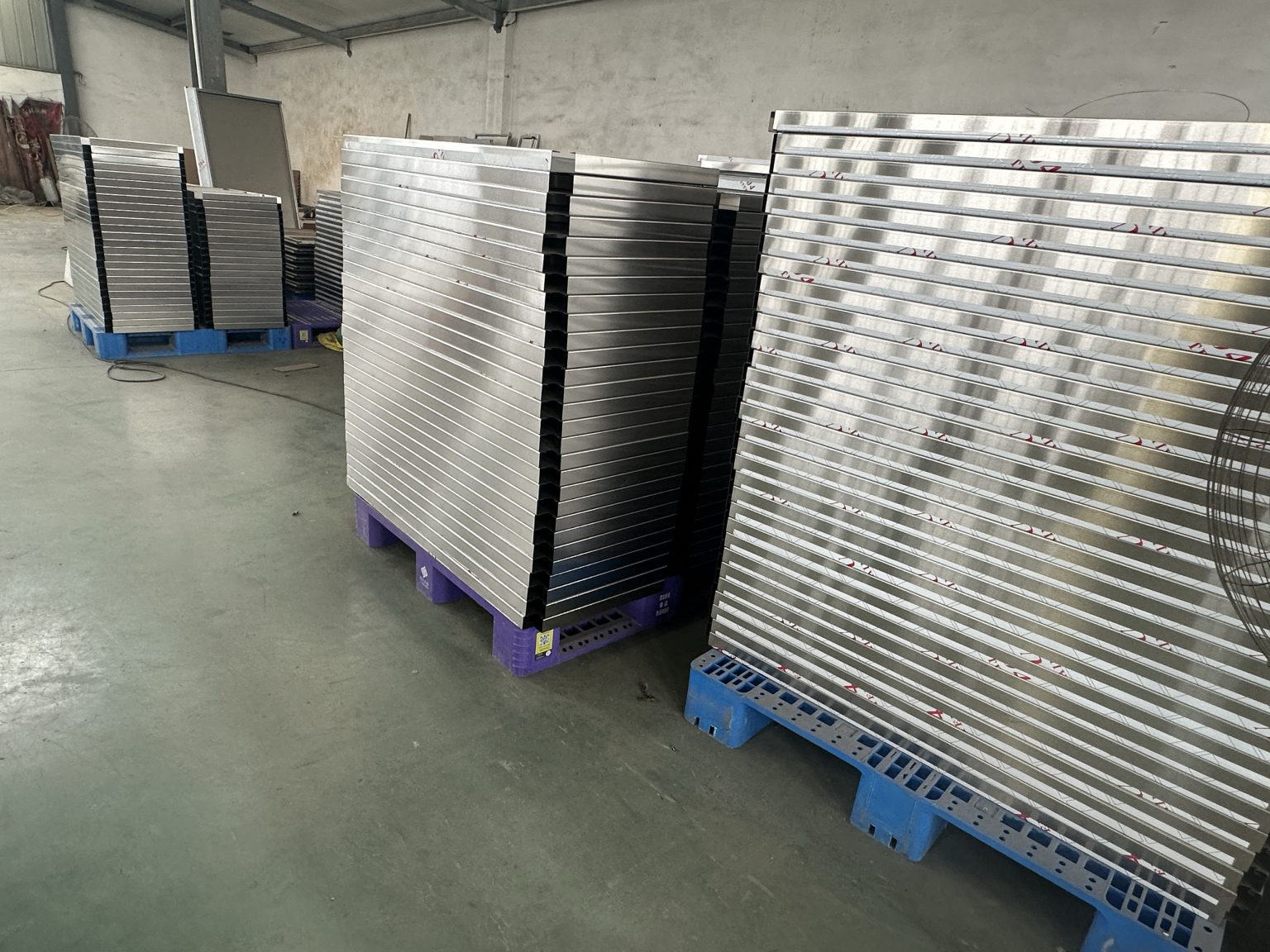
304 Stainless Steel Fabrication
Zibo Cook specializes in 304 stainless steel fabrication for commercial kitchen equipment and food processing applications. Grade 304 (18/8 stainless) is the most widely used food-grade stainless steel, offering excellent corrosion resistance, formability, and weldability at a cost-effective price point.
Why 304 Stainless Steel?
- Food-grade certification for direct food contact
- Excellent corrosion resistance against food acids and cleaning chemicals
- Good formability for complex shapes and deep drawing
- Easy to clean and sanitize – smooth surface finish
- Cost-effective compared to 316 grade
Our 304 Fabrication Services
Laser cutting, CNC bending, TIG/MIG welding, polishing, and deep drawing of 304 stainless steel for custom work tables, sinks, shelving, cabinets, and exhaust hoods.
Applications
Restaurant kitchens, hotel back-of-house, school cafeterias, central kitchens, and food processing facilities.
Frequently Asked Questions
Is 304 stainless steel safe for food contact?
Yes, 304 stainless steel is FDA-approved for food contact surfaces. It is non-reactive, does not leach chemicals, and is easy to sanitize.
What is the difference between 304 and 201 stainless steel?
304 contains higher nickel content (8% vs 4-6%), providing better corrosion resistance and formability. 201 is more affordable but less durable in harsh environments.
Related Pages
- 316 Stainless Steel Fabrication
- Food Grade Stainless Steel Fabrication
- 304 vs 316 Stainless Steel Guide
Related Resources
Request a Quote
Fill out the form below and we’ll get back to you within 24 hours with a competitive quote.
Or email us directly: [email protected]
Properties of 304 Stainless Steel
304 stainless steel, also known as 18/8 stainless due to its composition of 18% chromium and 8% nickel, is the most widely used stainless steel grade in the food service industry. Its combination of good corrosion resistance, excellent formability, and reasonable cost makes it the default choice for most commercial kitchen equipment applications.
The chromium content forms a passive oxide layer on the surface that protects the underlying metal from corrosion. This self-healing layer means that if the surface is scratched, it will re-form in the presence of oxygen, maintaining the material’s corrosion resistance. This property is particularly valuable in kitchen environments where equipment is frequently cleaned with harsh chemicals.
Applications of 304 Stainless Steel
We fabricate 304 stainless steel into a wide range of commercial kitchen equipment including work tables, sinks, shelving, cabinets, exhaust hoods, and food preparation surfaces. Its resistance to food acids, cleaning chemicals, and moisture makes it suitable for almost any kitchen application. 304 is also commonly used in food processing equipment, dairy industry components, and beverage dispensing systems.
For most indoor kitchen environments, 304 stainless steel provides more than adequate corrosion resistance at a cost-effective price point. It offers a good balance of performance and value, which is why it remains the standard material for commercial kitchen equipment worldwide.
Fabrication Considerations
When working with 304 stainless steel, proper fabrication techniques are important to maintain its corrosion resistance. We take care to avoid contamination from carbon steel tools, use appropriate grinding wheels, and ensure that weld areas are properly cleaned and passivated after fabrication. These steps help preserve the material’s protective oxide layer and ensure long-term performance.
Real Project Examples
See how our equipment performs in real commercial kitchen environments: