Amounts retained from the original article are undated budgeting examples, not verified current market prices or Zibo Cook quotations. Confirm currency, configuration, destination and complete delivery scope in a dated written offer.
The arithmetic behind maintenance
Maintenance is usually framed as a hygiene issue. It is more usefully framed as an arithmetic one.
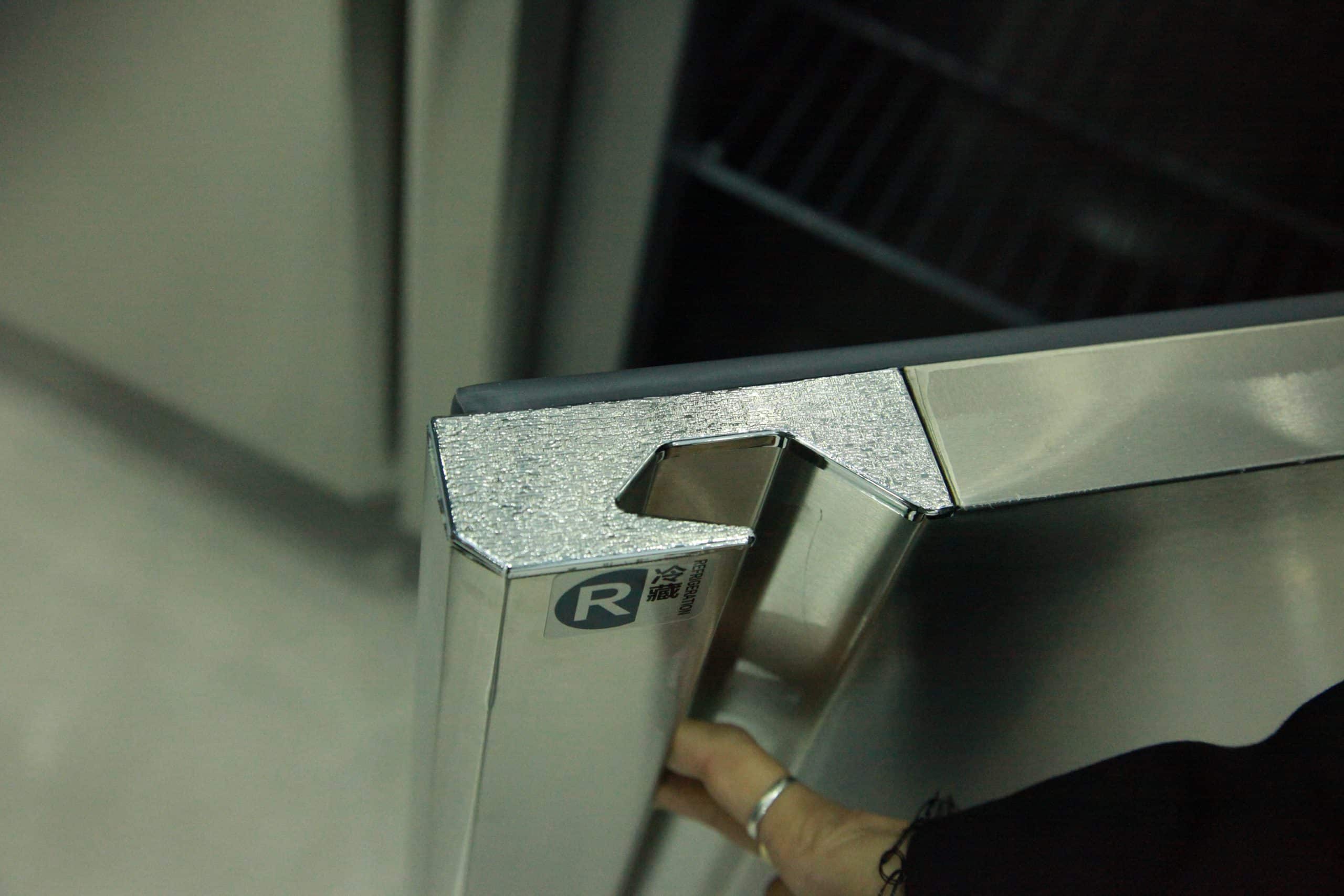
Handles and hinges: the parts cleaned most often and replaced most often.
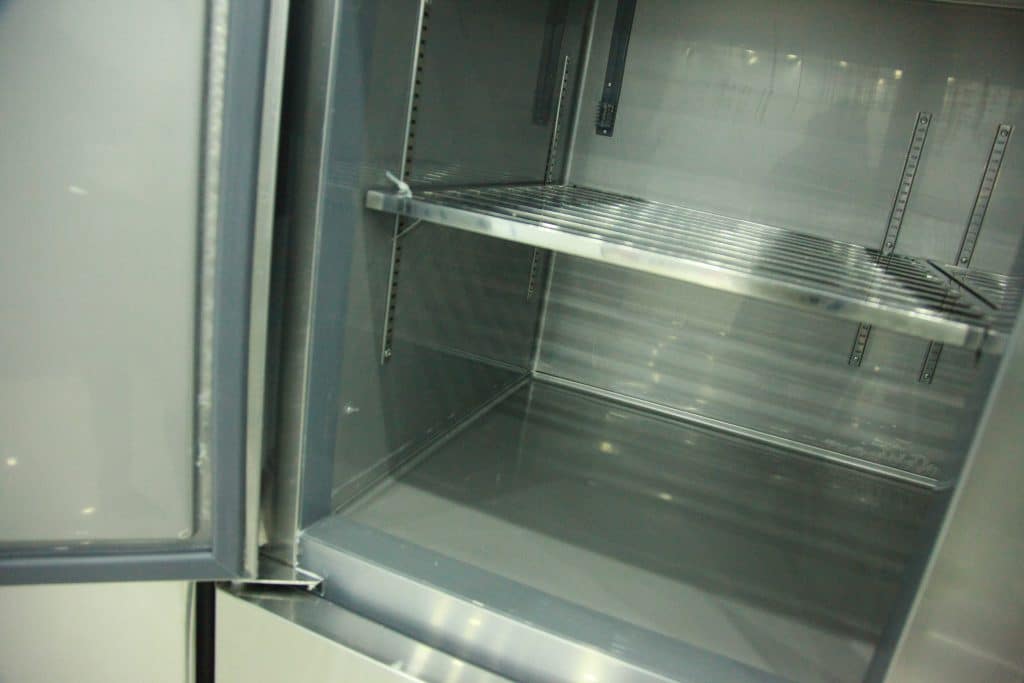
A worn hinge loads the door gasket and shortens its life.
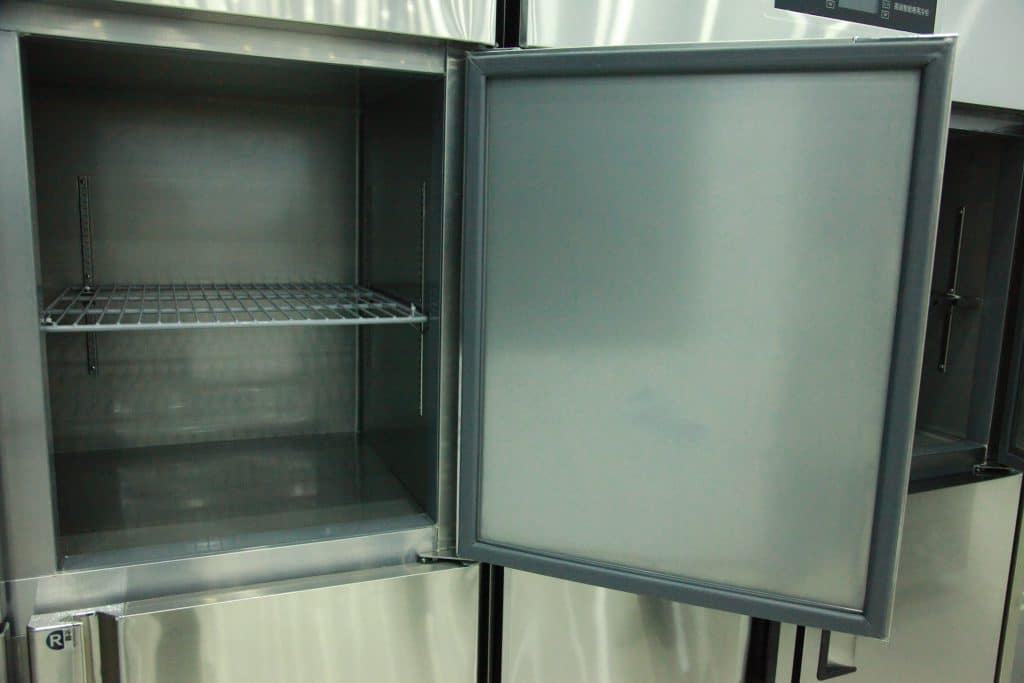
A gasket that no longer seals raises compressor run time.
Illustrative maintenance scenario: a two-door refrigerator bought for $4,000 and budgeted over 12 years needs accessible condenser cleaning. The time and interval depend on the manufacturer and kitchen conditions. A dirty condenser can increase energy use and operating pressure; no universal percentage or service life applies. Compare routine maintenance with parts, labour, inventory loss and downtime from a failure.
An illustrative $300 service expense and $3,000 failure expense are not current prices or a guarantee that one prevents the other. Set hood/filter intervals from the manufacturer, cooking duty and adopted fire code, including NFPA 96 where applicable.
Use these checklists as a starting format. Actual intervals and procedures follow the equipment manual, operating conditions and adopted code; lifespan ranges below are unverified planning examples from the original article.
Daily cleaning schedule
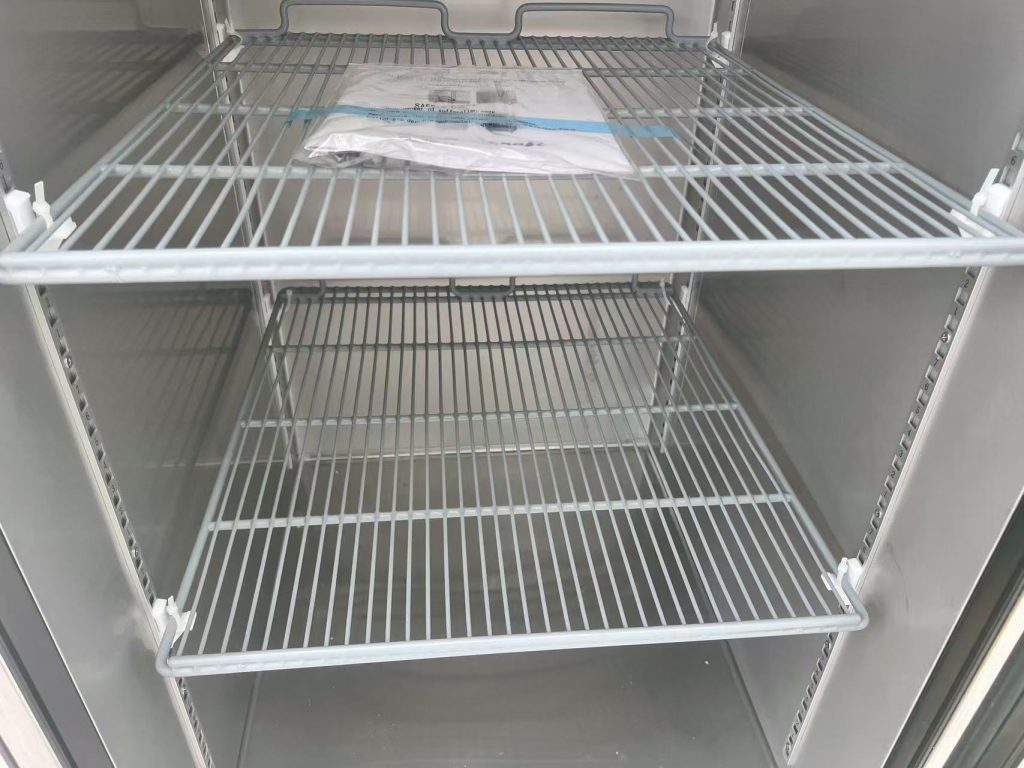 Shelving removed and cleaned, not just wiped in place.
Daily work is not really “cleaning” in the deep sense — it is sanitation plus surface hygiene, and it is the layer that most directly affects inspection outcomes.
| Task | Frequency | Note |
|---|---|---|
| Clean and sanitise food-contact surfaces | US reference: clean at task changes and at least every 4 hours for applicable continuous use, subject to the adopted code and its exceptions. | Wash, rinse, sanitise, air dry. Air drying matters — a towel recontaminates. |
| Clean and sanitise prep tables and cutting boards | After each task change, especially raw to ready-to-eat | Colour-coded boards reduce the risk of skipping this. |
| Wipe down equipment exteriors | End of each shift | Includes control panels, handles and door gaskets — the touch points. |
| Empty and clean sinks | After each use | Standing water in a prep sink is a routine citation. |
| Take out waste | Throughout the day, minimum end of shift | Waste left overnight is a pest control issue, not just an odour one. |
| Mop floors | End of each shift, and immediately after spills | Slip risk is a staff safety issue as well as a hygiene one. |
| Record refrigeration temperatures | Record temperature at the frequency required by the adopted code and operating food-safety plan, with corrective actions. | Both a maintenance signal and a HACCP record. |
| Clean hood filters | Daily in high-grease operations | The most neglected daily task in most kitchens. |
Weekly cleaning schedule
| Task | What it actually means |
|---|---|
| Deep clean ovens and ranges | Remove carbonised grease from the cavity, door glass and door gasket. Grease on a gasket causes it to harden and fail. |
| Clean refrigerator and freezer interiors | Shelves, shelf clips, drawer runners, door tracks and gaskets. Door tracks are where the soil accumulates and where inspections look. |
| Clean hood and filters properly | Degrease removable filters by the approved method and detergent. Check the hood collection chamber and grease cup; a rinse alone may not remove grease. |
| Clean and sanitise walls, backsplashes and splash zones | Especially behind cooking and prep equipment, where grease and food soil accumulate out of sight. |
| Check and clear drains | Floor drains, floor sinks and air gaps. Clearing a drain is cheap; a blocked drain during service is not. |
| Clean dish machine interior and curtains | Wash arms, nozzles, scrap screens and curtains. Scaled nozzles are the most common cause of poor wash results. |
| Clean under and behind reach-in equipment | Move only equipment designed for movement, following the manual and safely managing utility connections. Clean underneath and behind it. |
Monthly cleaning and inspection
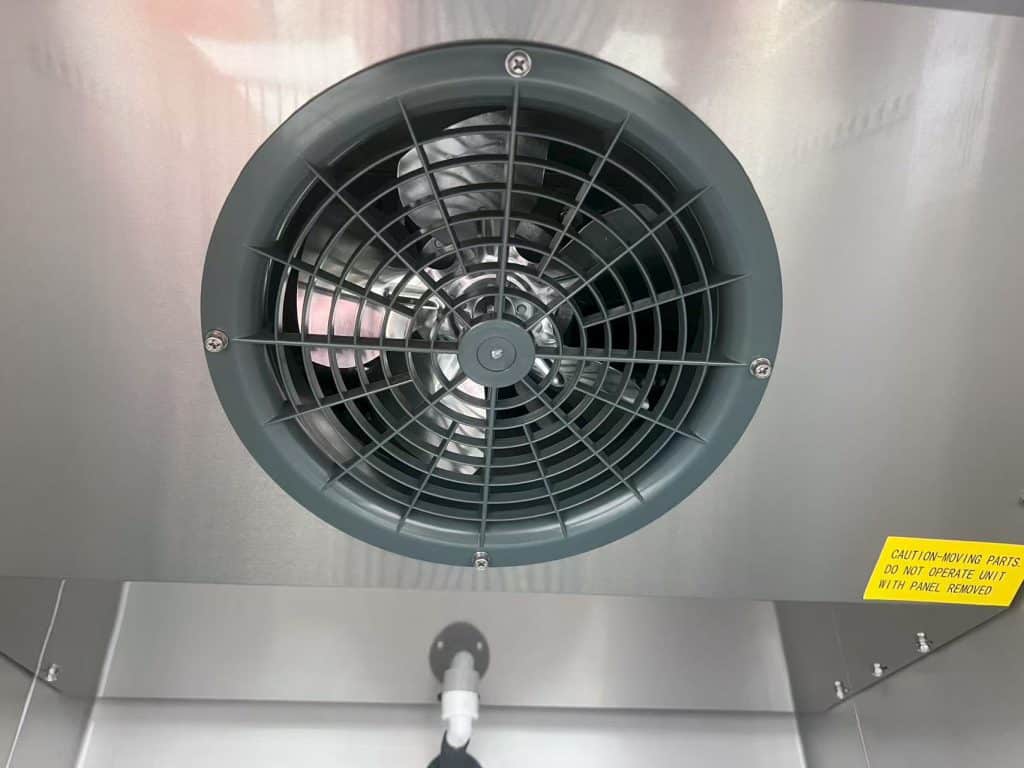 Condenser and fan: inspect and clean at the manufacturer’s interval
| Task | Purpose |
|---|---|
| Clean condenser coils on all refrigeration | A clean condenser can support heat rejection and efficient operation. Actual savings and compressor life depend on the model and conditions. |
| Defrost and clean freezers | Ice build-up reduces usable volume and forces the unit to work harder. Excess frost points at a gasket or defrost-cycle fault. |
| Clean exhaust ductwork accessible sections | Grease in ducts is the fuel load for a kitchen fire. Full duct cleaning is a contractor task on an NFPA 96 schedule. |
| Check gaskets and self-closing hinges | A paper-strip check can reveal uneven contact. Confirm gasket condition, hinge alignment and temperature performance; this test alone does not diagnose every seal fault. |
| Inspect electrical cords and plugs | Cuts, heat damage and loose strain reliefs. Damaged cords are a fire risk and a common inspection finding. |
| Lubricate hinges, casters and moving parts | Lubricate only the points and with the products specified by the manufacturer. Appropriate maintenance can reduce seized wheels. |
| Inspect shelving and work table welds and legs | A loose leg or a cracked weld in a table under a heavy load fails suddenly. |
Quarterly and annual tasks
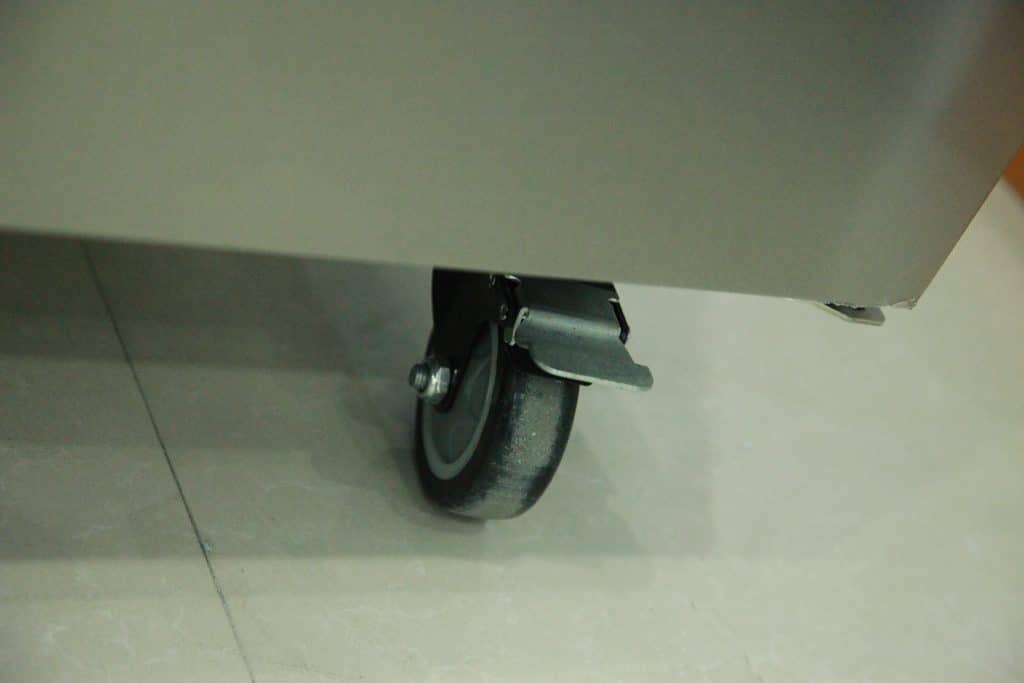 Inspect casters and mounting hardware, and tighten to the manufacturer’s torque and interval. Quarterly is a planning reference.
Quarterly
- A qualified refrigeration technician should assess performance and leaks on the manufacturer’s schedule. Do not open a sealed refrigerant circuit or connect pressure gauges routinely without a diagnostic reason.
- Clean and inspect fan motors — evaporator and condenser. Clean blades, check for bearing noise, lubricate where specified.
- Verify temperature instruments against a suitable calibrated reference at the required interval, and investigate deviations. An independent food-temperature check remains necessary even when the controller appears correct.
- Inspect gas connections and appliance shut-offs on gas equipment, including hose condition and the sediment trap.
- Use a qualified, appropriately authorised contractor. Confirm inspection and service intervals under the adopted code and system manual; semi-annual service is a US reference, not a universal rule.
- Check door hardware on refrigeration and ovens — hinges, handles, latches, and the self-closing mechanism.
Annually
- Professional service of major equipment — a scheduled visit costs far less than an emergency call, and it happens on your terms rather than on a Saturday night.
- Deep clean building services — full grease duct cleaning, ventilation inspection, and the areas behind fixed equipment.
- Plan replacement of worn gaskets, drive belts, seals, dishwasher curtains and casters as specified. Compare actual parts, labour and downtime costs; no fixed saving is guaranteed.
- Review the equipment register — age, service history, energy draw. This is what feeds the replacement decision below.
Service-life table: illustrative ranges from the original article, not verified manufacturer predictions or proof of a fixed maintenance benefit
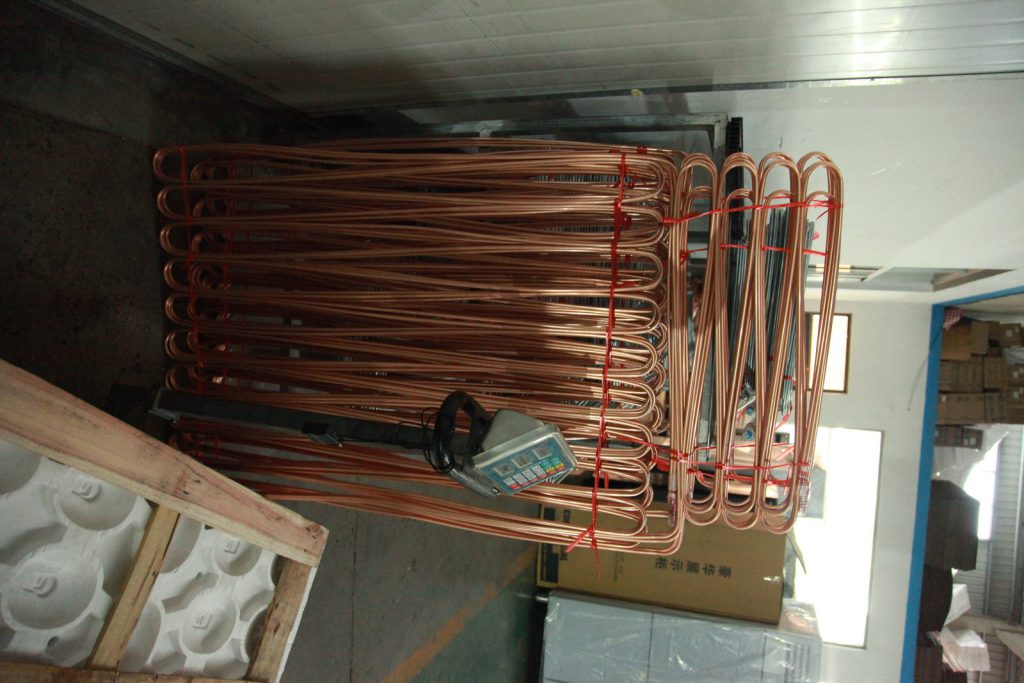 Copper joints and insulation — the failure points behind short service life.
| Equipment | Original illustrative range A | Original illustrative range B |
|---|---|---|
| Commercial refrigerator | 10–15 years | 4–7 years |
| Commercial freezer | 10–15 years | 4–7 years |
| Ranges and ovens | 10–15 years | 6–9 years |
| Dish machine | 7–10 years | 4–6 years |
| Fryer | 7–10 years | 4–6 years |
| Stainless work tables and sinks | 15–20+ years | 8–12 years |
| Small equipment (slicers, mixers, processors) | 5–10 years | 3–5 years |
The five factors that move equipment off the fast end of those ranges:
- Dirty condensers and blocked airflow can impair cooling and increase operating stress. Follow installation ventilation and service clearances; investigate actual faults.
- Grease and heat exposure. Equipment adjacent to fryers and griddles degrades faster. Positioning matters.
- Chloride exposure. Chlorine-based sanitisers, salt, and in coastal locations airborne chloride all attack stainless steel. The failure mode is pitting, and it starts at weld areas and crevices. We documented a real case in our chloride pitting case study.
- Thickness, span, reinforcement, alloy, finish and load all affect denting and stability. Specify actual nominal millimetre thickness and structural requirements by component instead of assuming a gauge number guarantees resistance.
- Overloading and misuse. Using a work table as a step, slamming oven doors, overloading shelving above its rating. Damage of this type is usually visible at the welds and mounting points.
The repair-or-replace calculation
Most operators replace on gut feel. A simple four-part test is more reliable:
- The 50 percent repair-cost and 60 percent age thresholds are budgeting heuristics, not universal rules. Compare reliable estimates for repair, replacement, downtime, energy and remaining useful life.
- Failure frequency. Two or more unscheduled breakdowns in twelve months is a pattern, not bad luck. Rolling repairs on a failing unit is the most expensive way to own equipment.
- Investigate increased energy use: workload, ambient temperature, settings, dirt and equipment faults can all contribute. Calculate replacement payback from measured use and current local tariffs.
- If temperature or sanitation performance fails, assess compliant repair or replacement. A refrigerant phase-down does not automatically prohibit continued use; check applicable rules and service options.
Worked example: a 9-year-old unit with an assumed 12-year life needs a $900 repair; replacement is $4,000. The repair is 22.5 percent of replacement and age is 75 percent of assumed life. Compare expected reliability, downtime, warranty, energy use and future repairs; these percentages alone do not decide whether repair wins.
Records: the part that pays off in an inspection
Maintenance records can support inspection evidence, a warranty claim and replacement analysis. They do not guarantee inspection acceptance or warranty coverage; retain the applicable terms.
What the log needs to capture, at minimum:
- Equipment identifier and location
- Date and time of each maintenance or cleaning action
- Task performed, and by whom
- Temperature readings for refrigeration, with the reading and the time
- Any fault observed and the action taken
- Service calls, parts replaced and cost
A wall-mounted clipboard works. So does a shared spreadsheet. The format is not the point — the point is that a maintenance programme with no records cannot be distinguished from no programme at all.
Buying equipment that is maintainable
Some of these decisions are made before you ever open a cleaning kit, and they are worth asking about at purchase:
- Ask for replaceable gasket part numbers and the approved replacement procedure. Required labour and time depend on the model.
- Is the condenser coil accessible without removing panels, or is it hidden behind a fixed plate?
- Are shelf clips, drawer runners and hinges standard parts available as spares?
- Ask whether the interior grade is 304 and whether corners have cleanable radiused or coved transitions. Specify material and finish for the application; the grade alone does not establish compliance.
- Are feet or casters adjustable, so the unit can be levelled on a sloped floor and moved for cleaning?
For the exact model and destination, request the applicable EU Declaration of Conformity and supporting documents. CE marking is the manufacturer’s conformity declaration under applicable legislation, not a general third-party safety approval. For an NSF-listed item supplied through a partner factory, verify the model, listing holder and producing facility before ordering. Confirm the MOQ, sample schedule, production schedule and any DDP scope in the current written quotation.
If you are setting up a maintenance programme or sourcing replacement parts for an existing fleet, send us the equipment list and we will tell you what is available as a spare.
Related reading
- Refrigeration specification and maintenance detail
- Safety, fire and health inspection compliance
- Maintenance, cleaning and warranty terms
- Case study: when corrosion is not a material defect
- Case study: weld discoloration is not automatically a defect
- Why a prep table wobbles: gauge and frame thickness
- Commercial refrigerators built for serviceable maintenance
Scope and verification
Amounts, percentages, lifespans, dimensions and schedule examples retained from the original article are planning references, not current quotations, guaranteed savings, engineering limits or universal requirements. Confirm the actual configuration, date, currency, taxes, service scope and applicable local rules.
Supplier descriptions and historic examples should be verified for the exact order. Request a dated specification, component materials and thickness, applicable model documents, inspection criteria, warranty, production timing and itemized delivery quotation before committing.
Send the product or drawing, quantity, destination and required date. Ask us to confirm the configuration, applicable documentation and itemized delivery scope.