What compliance actually costs when it fails
Safety failures can cause illness, fire, enforcement action, operational interruption and disputed insurance claims. Assess the actual risks and applicable requirements.
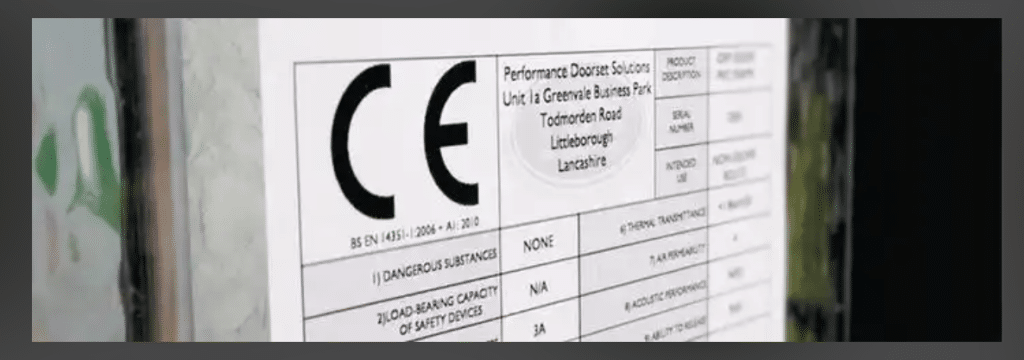
CE marking on equipment supplied to the EU.
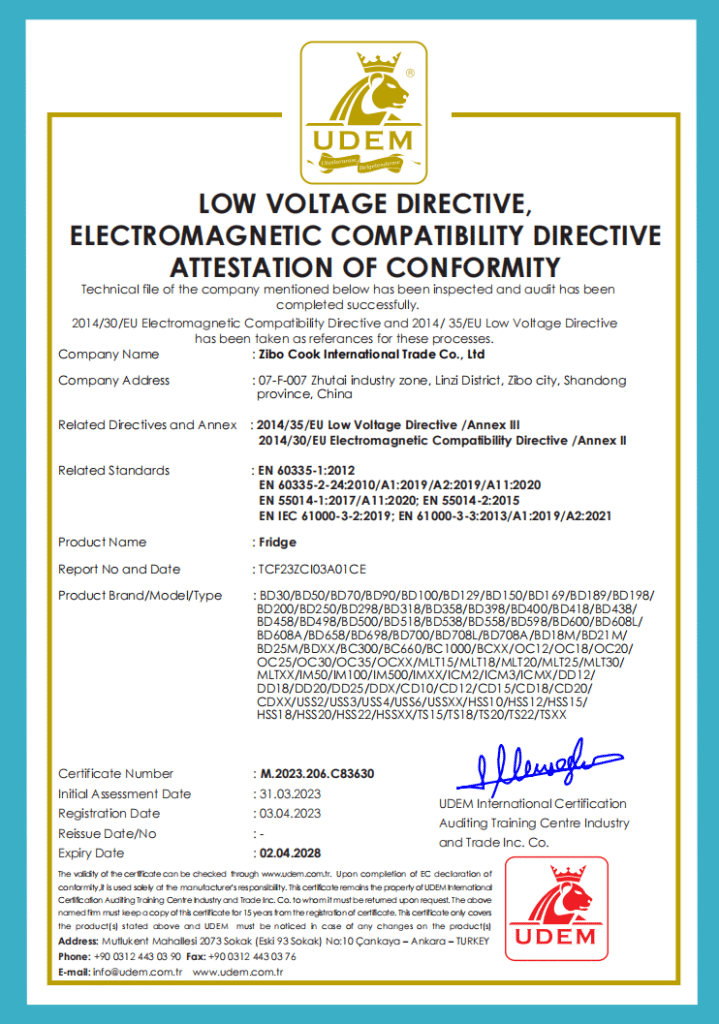
Declaration of Conformity retained and provided to the buyer.
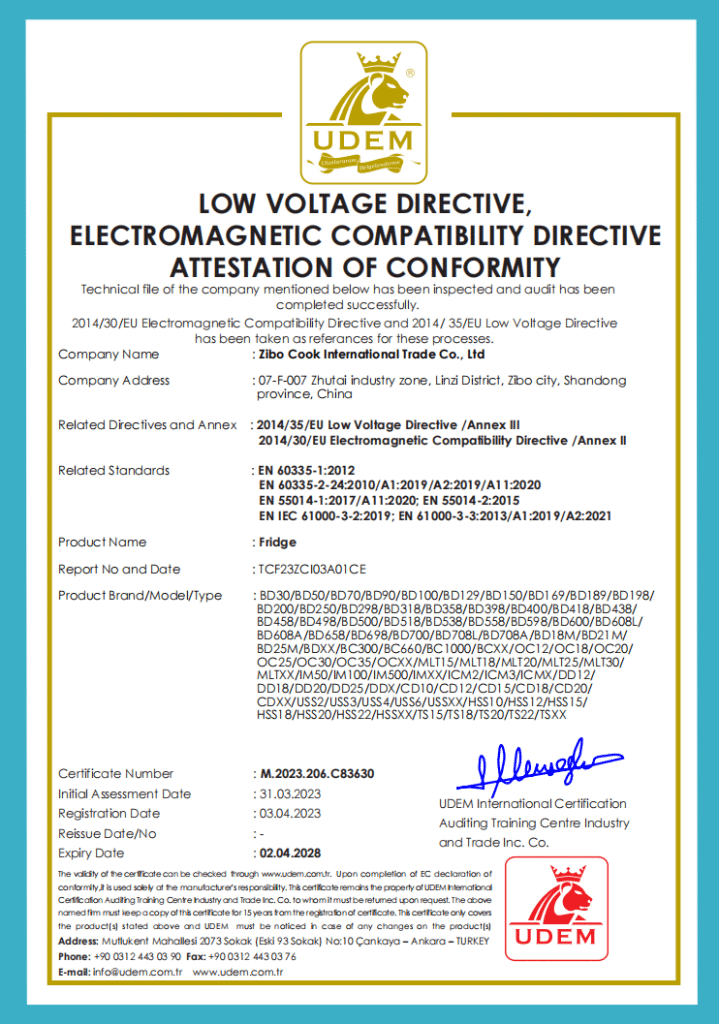
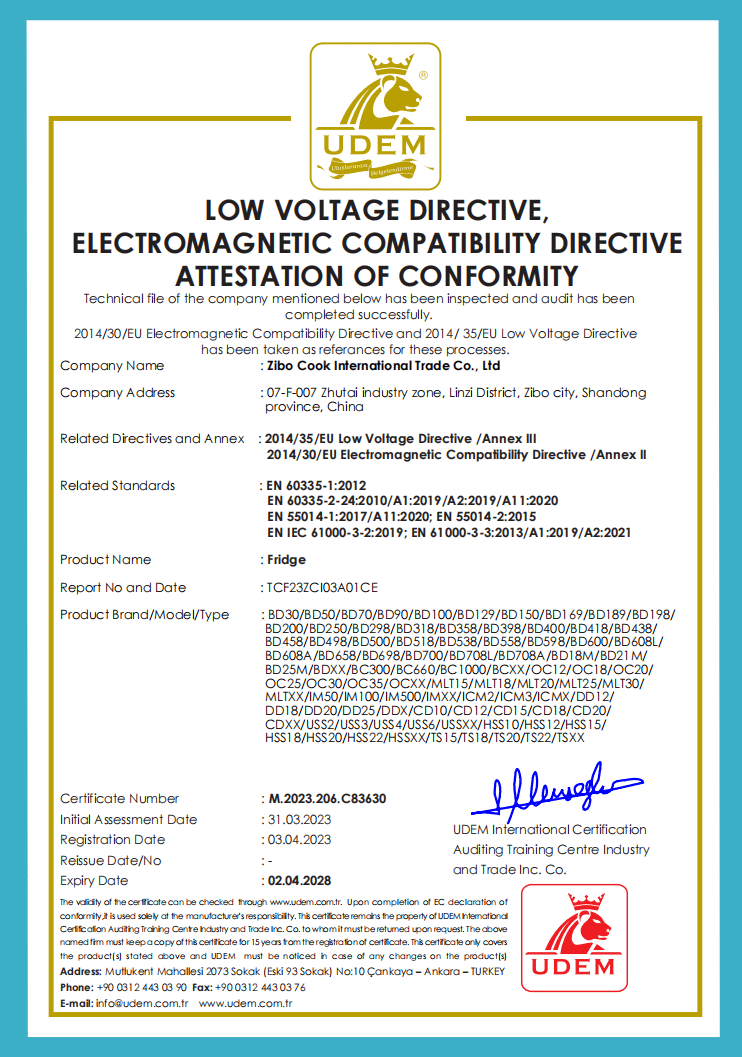
Certification documents kept on file per product family.
Check fire safety, food safety and sanitation with the responsible authorities. Inspection scope and approval procedures vary by jurisdiction.
Part 1: Fire safety
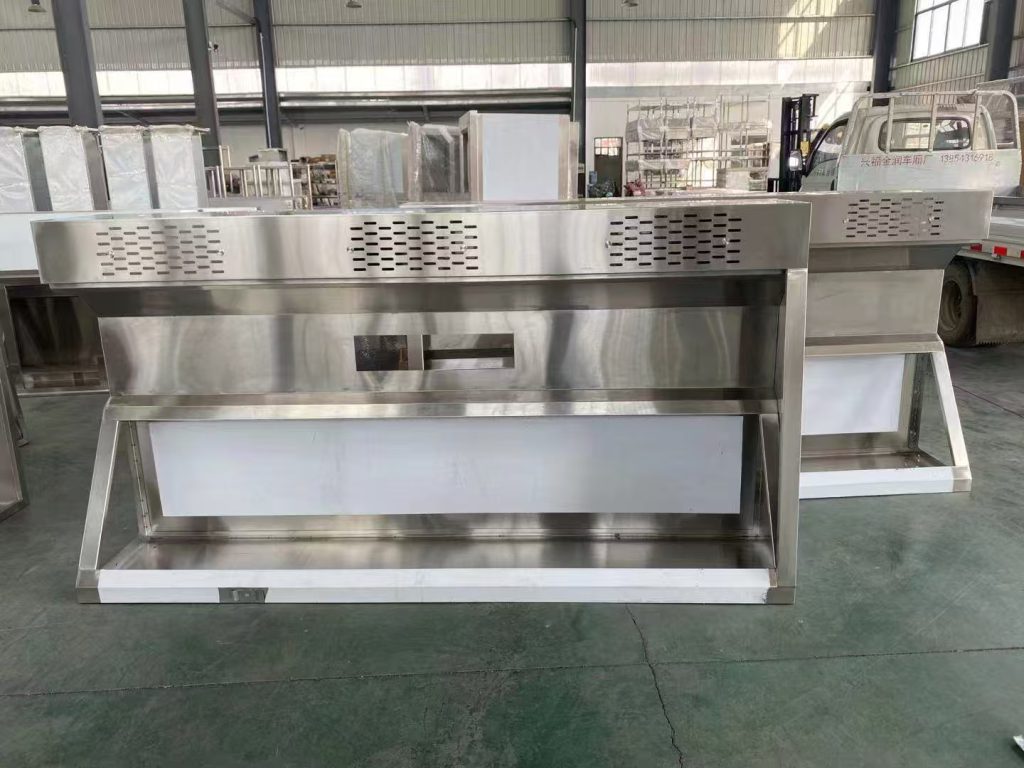 Hood and duct installed to the fire safety requirement.
Commercial kitchens are among the highest fire-risk occupancies in any building. Cooking equipment, hot oil and accumulated grease form a fuel load that is present every hour the kitchen operates.
The four hazard sources
- Grease accumulation in hoods, filters, plenum and ductwork. This is the fuel load that turns a small pan fire into a duct fire.
- Overheated cooking oil can ignite. Control temperature and follow the appliance instructions; do not rely on visible warning signs.
- Electrical faults in equipment, wiring and connections, compounded by heat, grease and moisture.
- Unattended cooking increases fire risk. Keep cooking operations supervised.
Prevention
- Have a qualified fire-protection professional confirm the adopted code, hood and duct cleaning/inspection intervals and suppression-system interlocks for the cooking duty. Do not assume the exhaust fan must shut down when suppression activates: follow the approved system design and local authority requirements.
- Never leave a fryer or a pan of oil unattended. Set a physical reminder if you need to, because this is a discipline problem rather than a knowledge problem.
- Maintain equipment electrically. Inspect cords and plugs monthly. Damaged cords are cheap to replace and expensive to ignore.
- Keep flammables away from heat sources. Includes packaging, paper goods, cleaning chemicals and staff belongings.
Suppression systems
Have a qualified fire-protection professional confirm the adopted code, hood and duct cleaning/inspection intervals and suppression-system interlocks for the cooking duty. Do not assume the exhaust fan must shut down when suppression activates: follow the approved system design and local authority requirements.
- Have the contractor confirm nozzle placement and coverage for the actual appliances, hood and duct under the approved system design.
- Use a qualified, appropriately authorised contractor. Confirm inspection and service intervals under the adopted code and system manual; semi-annual service is a US reference, not a universal rule.
- Keep required nozzle caps correctly fitted and nozzles free of grease, following the system manual. Contamination can impair operation.
- Manual pull stations must be accessible and unobstructed, and staff must know where they are.
Extinguishers
Class K extinguishers are specifically designed for cooking oil and grease fires, and are the correct type for kitchen cooking areas. Class ABC extinguishers do not reliably extinguish a hot oil fire and can cause splash and spread. Requirements to verify with your local fire authority:
- Class K located within the cooking area, typically within 30 feet of the cooking equipment
- Additional ABC extinguishers for general occupancy coverage
- Monthly visual checks and annual professional servicing
- Staff trained in use, and training documented
Part 2: Food safety
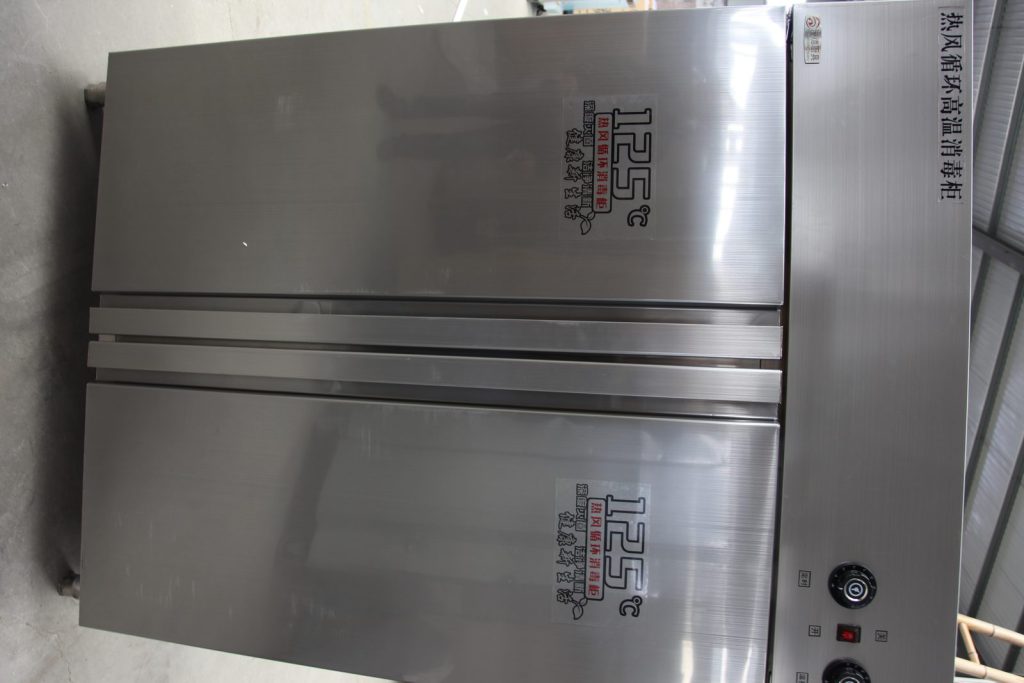 Sterilizing cabinet supporting the food safety regime.
Food safety is fundamentally about controlling time and temperature, and then preventing cross-contamination between things that are raw and things that are ready to eat.
Temperature control
| Function | Requirement |
|---|---|
| Cold holding | 41°F (5°C) or below under the US Food Code; 38°F (3°C) is a sensible operating target to preserve margin |
| Frozen storage | Typical frozen-storage target: 0°F (−18°C) or below. Confirm the food, equipment and applicable rules; the Food Code requirement is to keep frozen food frozen. |
| Hot holding | 135°F (57°C) or above |
| Cooking, poultry | 165°F (74°C) — US reference example; verify food category, required time at temperature and exceptions in the adopted code. |
| Cooking, ground meat | 155°F (68°C) — US reference example; verify food category, required time at temperature and exceptions in the adopted code. |
| Cooking, whole cuts of pork, beef, fish | 145°F (63°C) — US reference example; verify food category, required time at temperature and exceptions in the adopted code. |
| Cooling, cooked food | US Food Code example for cooked time/temperature-control-for-safety food: cool from 135°F to 70°F (57°C to 21°C) within 2 hours, and from 135°F to 41°F (57°C to 5°C) or less within 6 hours total. Confirm the adopted rule and food category. |
| Reheating | 165°F (74°C) within 2 hours — US reference example only; the adopted code specifies food category, holding time and exceptions. Verify the applicable time–temperature combination. |
Validate the cooling process for the actual food mass, container depth and load, including the 135-to-70°F stage. Do not assume an ordinary holding refrigerator can achieve the required cooling rate.
Equally important: a refrigerator only holds a temperature, it does not prove one. Every cold-holding unit needs a calibrated thermometer and a documented log. A unit running at 41°F with a two-minute door-opening cycle at peak can spend part of the day above 41°F. Size and position refrigeration so that it recovers, and log so that you can show it.
Cross-contamination
- Separate raw and ready-to-eat. Separate boards, separate utensils, separate surfaces. Colour coding is a practical control.
- Store raw below ready-to-eat. Raw protein on a lower shelf, covered, so nothing can drip onto food below. Order from bottom to top: raw poultry, raw ground meat, raw whole cuts, seafood, then ready-to-eat at the top.
- Clean and sanitise between tasks, not just between shifts.
- Design the layout to support this. This is where kitchen layout and food safety intersect — the layout guide covers the flow requirement in detail.
Personal hygiene and documentation
- Provide conveniently located handwashing sinks with the water supply, soap and approved hand-drying method required by the adopted code. Keep them accessible and dedicated to handwashing.
- Handwashing at defined trigger points: on entry, after handling raw food, after using the restroom, after handling waste, after cleaning.
- Clean uniforms and effective hair restraints.
- Follow the adopted employee-health reporting, restriction and exclusion rules according to symptoms, diagnosis and duties.
- Food handler training certificates kept on site where the jurisdiction requires them.
- Confirm whether a written HACCP plan or other food-safety procedures are required for the operation. Requirements depend on market and process.
Part 3: Passing the health inspection
Inspections are predictable. The same categories come up again and again, and most failures are not judgement calls — they are physical conditions an inspector can see and measure.
The recurring failure list
| Finding | Why it happens | How to prevent it |
|---|---|---|
| Cold holding above 41°F | Unit undersized, coil fouled, overfilled, or door cycle at peak | Size refrigeration correctly; clean the condenser on the manufacturer’s schedule and keep air paths clear. |
| No handwash sink, or blocked sink | Layout decision made at build; or sink used for storage | Provide accessible handwashing sinks in the locations required by the adopted code; keep them free of stored items. |
| Equipment not cleanable | US fixed-equipment examples: floor-mounted units generally need 6 inches of clearance on legs, and counter-mounted units 4 inches below them, unless sealed as permitted or a specific exception applies. These are not a 4-inch gap between units. Check the adopted code and exact installation. | Design clearances into the layout at build stage |
| Missing three-compartment sink or inadequate warewash | Sized for small items; no sanitising step | Confirm an approved washing, rinsing and sanitizing arrangement for the largest item. A dish machine does not automatically replace every sink requirement. |
| Raw and ready-to-eat stored together | No designated storage order, insufficient shelving | Post the storage order; buy enough shelving rather than stacking |
| Grease in hood, filters or plenum | No daily filter cleaning routine | Follow the approved filter, hood and duct cleaning schedule for the cooking duty and record the work. |
| No temperature log | Perceived as paperwork | Record temperature at the frequency required by the adopted code and operating food-safety plan, with corrective actions. |
| Structural defects — cracked tiles, damaged walls, gaps at wall base | Deferred maintenance | Repair before inspection; coved base, sealed penetrations |
| Pest evidence or entry points | Gaps, unscreened openings, waste left overnight | Seal penetrations, self-closing exterior doors, no overnight waste |
How to prepare
- Walk the kitchen yourself with the inspection form a week before. Different jurisdictions publish different forms, but they share the same structure: temperature control, sanitation, employee hygiene, facility condition, documentation.
- Take a probe thermometer and measure everything cold and hot. Fix units that are marginal before the inspector finds them.
- Clean the places nobody cleans — behind and under equipment, hood plenums, floor drains, the underside of shelving, door tracks. This is where inspectors look precisely because it is where operators do not.
- Assemble the paperwork — temperature logs, cleaning schedule records, suppression system service tags, extinguisher inspection tags, pest control reports, staff training certificates. Put it in one folder that can be produced on request.
- Brief the staff. An inspector asking a line cook where the sanitiser bucket is will get an answer that either helps or hurts. Everyone should know the answers.
How equipment specification affects compliance
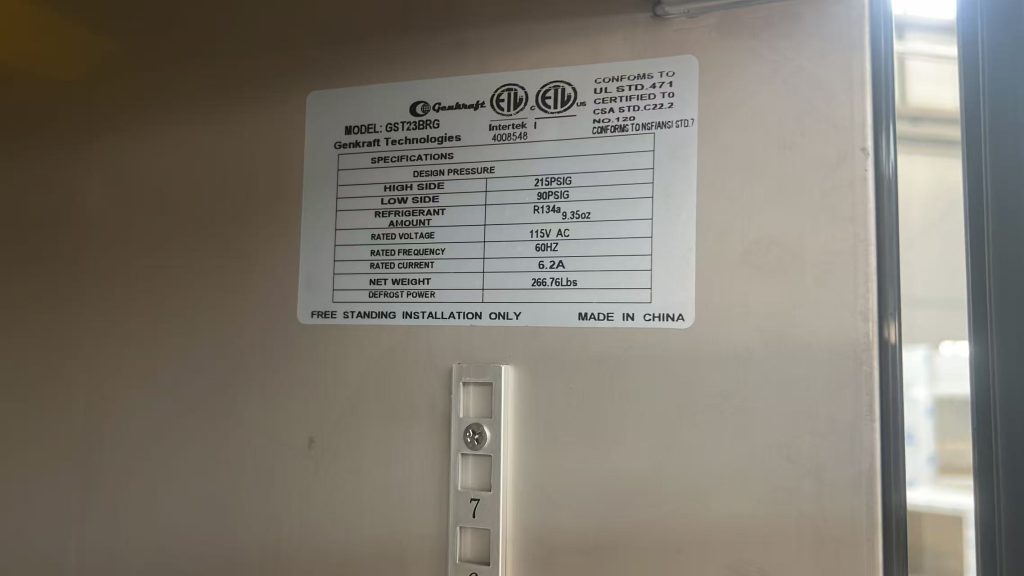 ETL listing label on refrigeration equipment.
Several compliance outcomes are determined months before inspection, at the point of purchase:
- Food-contact surfaces must meet the applicable material, corrosion-resistance, durability and cleanability requirements. Specify grade and finish for the exposure. A steel grade alone does not prove food-contact compliance, and 201 cannot be rejected solely by its grade number.
- Food-contact joints should meet the applicable design and sanitation requirements: smooth, durable, cleanable and free of defects that retain food residue or dirt. Required weld penetration and finishing depend on the joint and application. Appearance alone does not establish structural integrity or determine an inspection result.
- Dents and damage can hinder cleaning. Specify actual thickness, span, reinforcement and finish; assess whether repairs restore cleanability.
- Refrigeration needs to be able to recover temperature. That is a function of cabinet insulation, compressor sizing and clearance for condenser air flow — all specified at purchase.
- For the US, verify the locally accepted route for the model, including applicable NSF/ANSI 2 or NSF/ANSI 7 and any accepted UL EPH listing. For the EU, check applicable CE legislation and food-contact requirements under Regulation 1935/2004. CE is the manufacturer’s declaration, not blanket third-party approval.
- Certificates can be forged. Verifying them is a specific skill and worth learning before you buy — we cover it step by step in our guide to verifying NSF certificates.
Where to start if you are doing this from scratch
- Establish the three temperature bands and buy equipment that can hold them under load.
- Write a cleaning schedule with daily, weekly, monthly and annual columns, and put it on a wall where it is actually used.
- Record temperature at the frequency required by the adopted code and operating food-safety plan, with corrective actions.
- Get the fire suppression system serviced on its cycle and keep the tag.
- Set the grease duct cleaning interval from your cooking volume and put it in the calendar.
- Buy equipment with the certification your market requires and verify the certificate rather than accepting the logo.
For the exact model and destination, request the applicable EU Declaration of Conformity and supporting documents. CE marking is the manufacturer’s conformity declaration under applicable legislation, not a general third-party safety approval. For an NSF-listed item supplied through a partner factory, verify the model, listing holder and producing facility before ordering. Confirm the MOQ, sample schedule, production schedule and any DDP scope in the current written quotation.
If compliance requirements are part of your equipment decision, send us the certification your market requires and we will confirm what we can supply against it.
Related reading
- Cleaning schedules that keep hoods, ducts and filters compliant
- Verifying the certification a supplier claims
- Weld seams and health inspections
- Range hood and ventilation systems
- Commercial kitchen exhaust hoods
- Commercial kitchen equipment certifications explained
- Certification requirements by country
Scope and verification
Regulatory examples apply to the named market. Confirm the locally adopted requirements and acceptance with the authority and a qualified designer. Translation does not make US, EU or other requirements universal. The FDA Food Code is a model for local adoption, not a single worldwide law.
NSF official listings · Intertek ETL Sanitation · European Commission: CE marking · FDA Food Code and local adoption · EESS: scope and compliance · UK government: CE marking ·
Send the product or drawing, quantity, destination and required date. Ask us to confirm the configuration, applicable documentation and itemized delivery scope.