Verify the NSF certificate and its scope
NSF certification assesses the listed food-equipment model against the applicable sanitation standard, including relevant material, design and cleanability requirements. Verify the current model listing and its scope. Certification does not replace proper installation, cleaning or local acceptance.
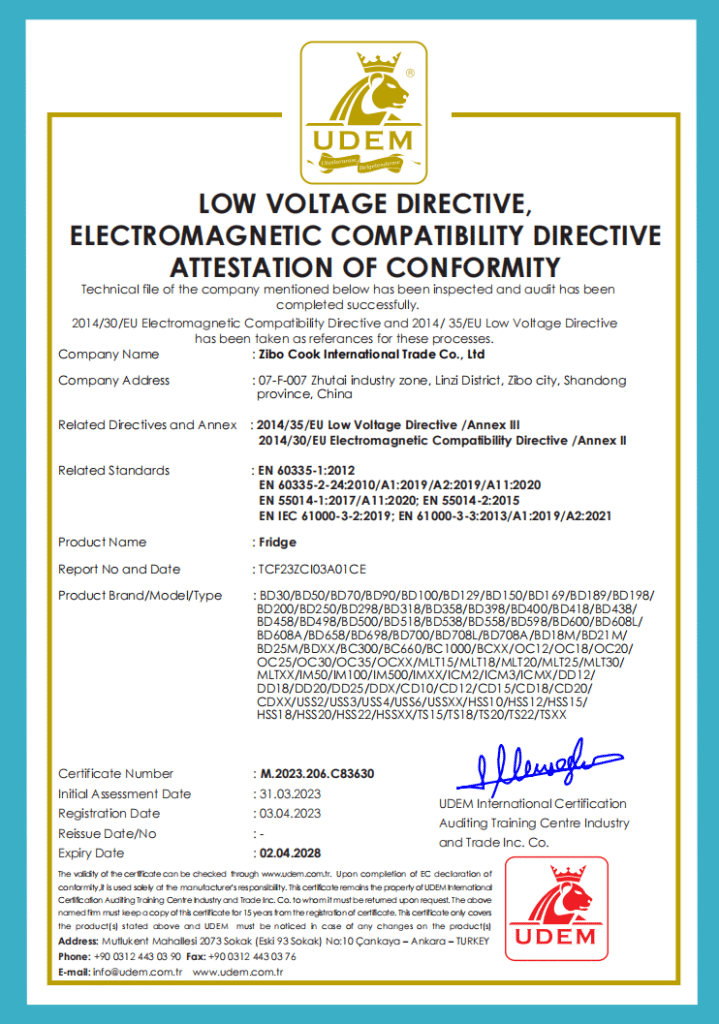
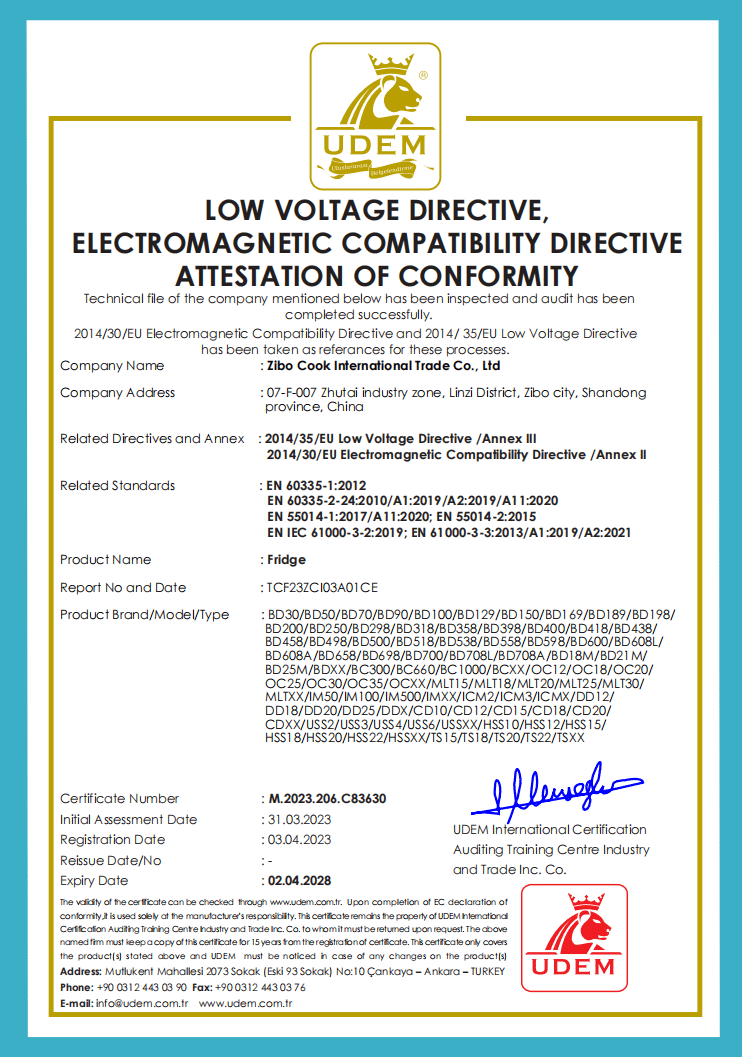
Illustrative CE document from the original article; request current, model-specific conformity documents.
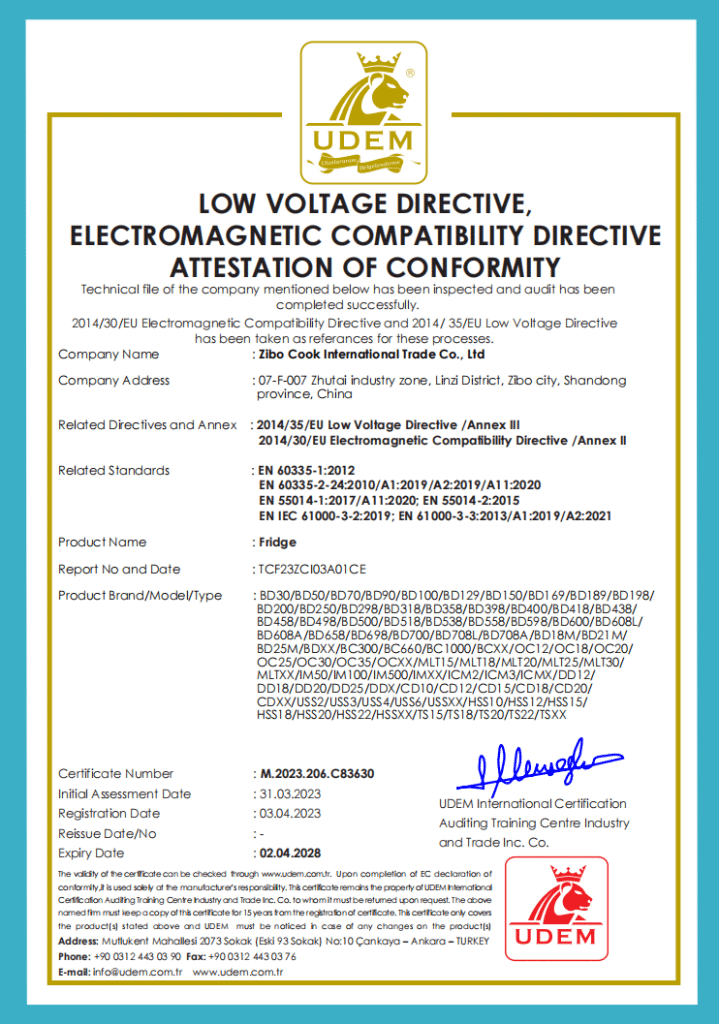
Certificates should name the product and the facility.
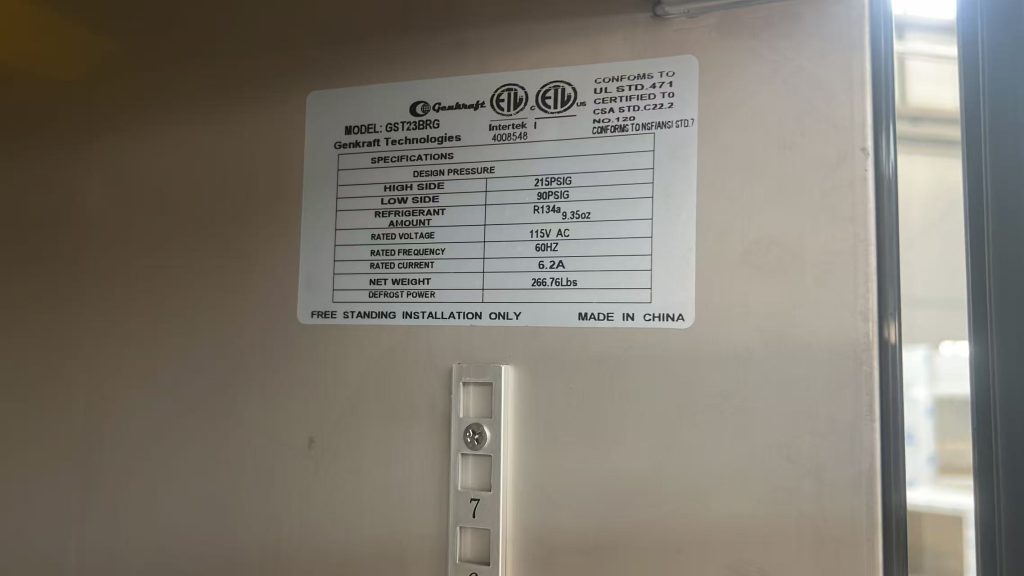
Listing labels are traceable — check the number, not the logo.
Investigate possible document alteration, mismatched holders or products, and unsupported listing claims:
- A certificate image that has been edited to substitute a company name or a model number
- A genuine certificate belonging to a different factory, presented as the supplier’s own
- An expired record or a record for another product; neither by itself proves forgery. Confirm current status and applicability.
- An “NSF compliant” or “NSF tested” statement that is not an NSF listing at all
The public listing search is free. Allow time to resolve model, holder or facility discrepancies with NSF.
First, understand what NSF actually certifies
“NSF certified” on its own is not meaningful. You need to know which standard, because they cover different things:
| Standard | What it covers | Where you see it |
|---|---|---|
| NSF/ANSI 2 | Food equipment — design, construction and cleanability of commercial food equipment | Work tables, sinks, prep units, shelving, most stainless fabrication |
| NSF/ANSI 51 | Food equipment materials — the suitability of materials intended to contact food | Materials used in food-contact construction, coatings, sealants |
| NSF/ANSI 7 | Commercial refrigerators and freezers | Reach-in refrigerators, undercounter units, refrigerated prep tables and applicable walk-in systems; verify the exact listed product |
| NSF/ANSI 3 | Commercial warewashing equipment | Commercial dishwashing and glasswashing machines; confirm the exact listed model and scope. Fabricated sinks may be covered by a different relevant standard. |
| NSF/ANSI 4 | Commercial cooking, rethermalisation and powered hot food holding | Ranges, ovens, fryers, griddles and powered hot-food holding wells |
Two important consequences of this structure:
- A certificate for one standard does not cover equipment in another category. A supplier showing an NSF/ANSI 2 listing for a work table is not thereby certifying a refrigerator. Ask for the listing that matches the product you are buying.
- Certification attaches to a specific product and a specific manufacturing facility, not to a brand in general. This is the detail most buyers miss, and it is the one that matters most when the seller is not the manufacturer.
Own certification versus a partner factory’s certification
This distinction causes more confusion than any other, so it is worth stating plainly.
The seller, certificate holder and production facility may be different entities. Record their relationships and confirm that the exact model and manufacturing site are covered by the current listing. Disclosure alone does not establish applicability.
| Seller holds the certificate | Partner factory holds the certificate | |
|---|---|---|
| Certificate holder name | The seller’s company name | A different company name — the manufacturing plant |
| Who is audited by NSF | The seller’s facility | The partner plant |
| What you should ask for | The listing number and the certificate | The listing number, the certificate, and confirmation of which facility actually produces your order |
| Risk if undisclosed | Still verify model, facility and current scope | The certificate may belong to a plant that will not make your goods — a genuine but irrelevant certificate |
Naming a partner is a first step. Verify the holder, listed model and actual production facility before relying on the document for the order.
For the exact model and destination, request the applicable EU Declaration of Conformity and supporting documents. CE marking is the manufacturer’s conformity declaration under applicable legislation, not a general third-party safety approval. For an NSF-listed item supplied through a partner factory, verify the model, listing holder and producing facility before ordering. Confirm the MOQ, sample schedule, production schedule and any DDP scope in the current written quotation.
Step 1 — Compare the PDF with the official NSF listing
Use NSF’s public listing database to check current records. Ask NSF to clarify discrepancies or records you cannot locate.
- Go to the NSF listings search on nsf.org.
- Search the holder’s company name, then check the quoted model and applicable standard. If the seller differs from the holder, document the relationship and production site.
- Confirm the product category matches what you are buying. A work table listing and a refrigeration listing are different listings.
- Confirm the listing status is current. Expired and withdrawn listings still circulate as PDFs.
- Check the covered models or product description against the model you are being quoted.
If the company name on your quotation does not appear in the database at all, and the supplier cannot name the certificate holder, stop and resolve that before anything else.
Step 2 — Read the certificate for the details that identify it
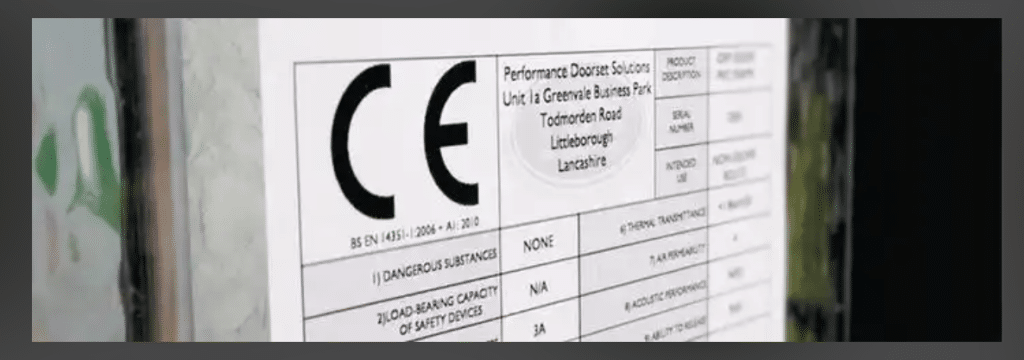 Marking on the unit should match the certificate on file.
A genuine certificate contains an identifiable set of elements. Check that all of them are present and mutually consistent:
- Exact legal name of the listing holder matching the official record. If the seller is different, document the manufacturing relationship and confirm that the listed facility will make the order.
- The manufacturing facility address — the site that was audited, which may not be the seller’s address
- The standard number — for example NSF/ANSI 2, not just “NSF”
- The specific products or model designations covered
- A unique certificate or listing number
- Issue date and any stated expiry or review date; confirm current listing status directly rather than assuming every document has an expiry date.
- The NSF mark in the form appropriate to the listing type
Resolve missing or inconsistent details before relying on the document or authorizing the next contractual milestone.
Step 3 — Look for signs of editing
Look for possible editing, while remembering that scans, conversion and compression can also change document appearance:
- Inconsistent fonts. Company names and numbers are the usual edit points, and they frequently sit in a subtly different typeface, weight or size from the rest of the document.
- Misaligned baselines. An edited name that does not sit on the same baseline as the surrounding text.
- Background mismatch. Edited regions often show a faint rectangle where the surrounding watermark, guilloche pattern or gradient has been disturbed. Zoom in.
- Compression artefacts. Pixelation or blurred blocks can result from editing, scanning or recompression; investigate rather than treating them as proof.
- Logo distortion. A re-scaled or re-drawn NSF mark that does not match the official proportions.
- Text layer. Unselectable text may be a scan, outlined text or an image. It does not by itself prove alteration.
- PDF metadata. Check the document properties. Creation and modification dates, and the producing application, sometimes reveal that a document was reauthored rather than issued.
Visual clues and a database mismatch require clarification. Even together, they do not establish forgery without verification by the issuer.
Step 4 — Request written confirmation from the supplier
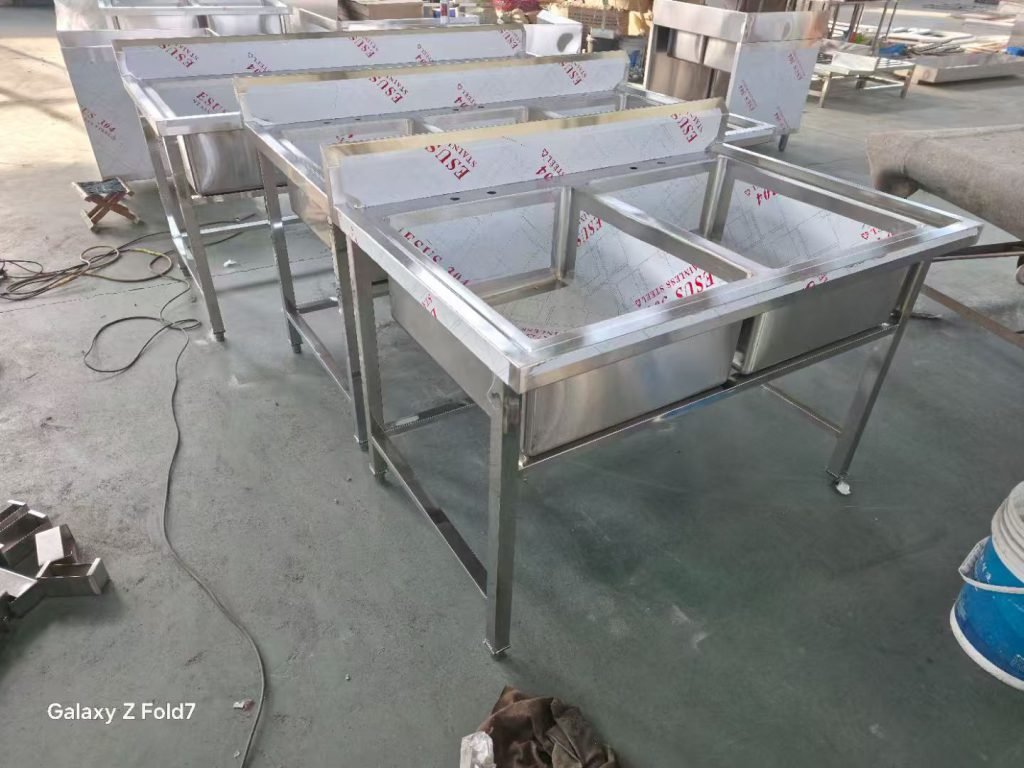 Ask for a photo of the nameplate on the unit you will actually receive.
Send this, in writing:
“Please confirm the exact legal name of the NSF certificate holder for this model, the certificate or listing number, the standard number, the address of the certified manufacturing facility, and confirm whether that facility will produce our order. Please also send the certificate as a PDF issued by NSF.”
Request all five details and agree a reasonable response deadline. A delay is not proof of fraud. Resolve unexplained inconsistencies independently before proceeding.
Step 5 — Verify directly with NSF
Send NSF the certificate or listing number, holder name and model to clarify validity, current status and coverage. Use contact details obtained independently from NSF.
Step 6 — Ask for the original, and for the contact at the issuing body
Request the issuer’s original file when available and compare it with the official listing. A PDF is not proof of authenticity, and a screenshot does not by itself prove fraud. Obtain issuer contact details independently.
If the certificate turns out to be fake
- If falsification is confirmed, preserve evidence and review payment or shipment holds under the contract and applicable dispute procedures. Do not rely on an unverified document to approve a milestone.
- Verify any replacement document through the same official checks. A replacement alone does not resolve the original discrepancy.
- Use the platform’s reporting and dispute procedures when applicable. Preserve records and observe the relevant deadlines; reporting does not guarantee recovery.
- Report it to NSF. NSF takes misuse of its mark seriously and has an interest in knowing.
- Recheck the full specification, including claimed 304 material. A document problem does not prove a material defect. Agree representative sampling and suitable composition tests with a qualified inspector or laboratory.
Three things to remember
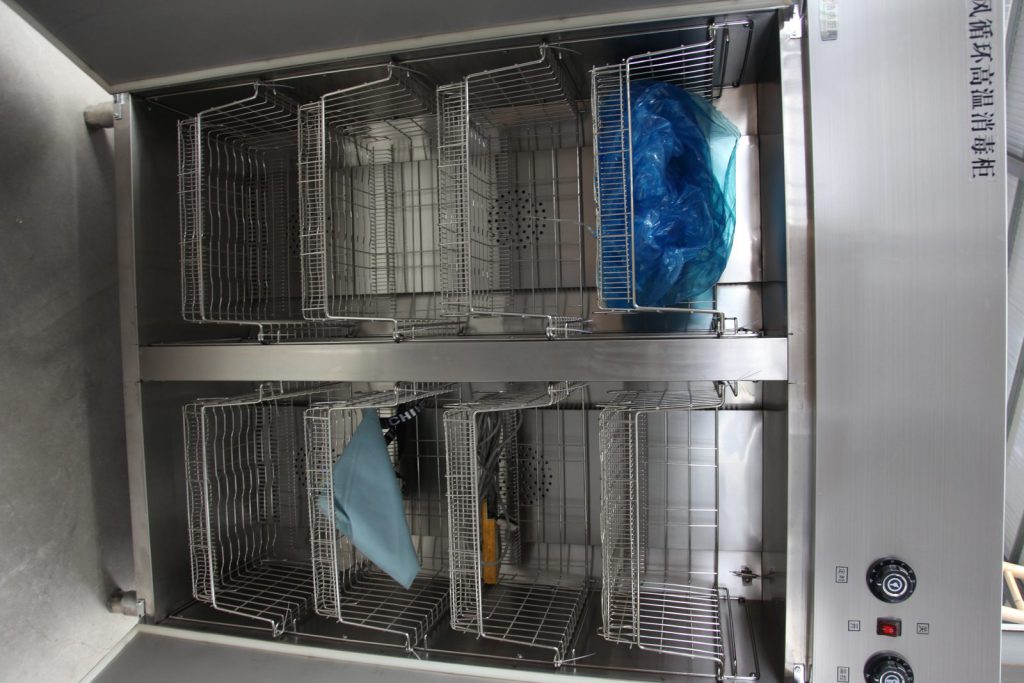 Openly documented construction makes claims verifiable.
- Verify the number, model and current listing through NSF. The PDF must agree with the official record.
- Name the standard. “NSF certified” means nothing until you know whether it is NSF/ANSI 2, 7, 3 or 4, and whether that standard covers what you are buying.
- Confirm the actual manufacturing site and its coverage for the model. A disclosed partner facility still needs verification.
If you want to see the broader landscape of what certification actually requires for commercial kitchen equipment, our guide to certifications covers the standards by market. And when you are ready to specify an order, send us the certification your market requires and we will confirm in writing what we hold and what the partner factory holds for each item.
Send the product or drawing, quantity, required certification, destination and required date. Confirm minimum quantity, sample timing, production timing and shipment schedule for that configuration in writing. DDP availability, taxes, customs clearance and final delivery depend on the product and named destination and must be itemized in the quotation.
Related reading
- What certification means in practice for safety and health inspection
- The wider supplier vetting and negotiation process
- What NSF certification actually covers
- NSF versus ETL certification
- Which US states require NSF certification
- Certification requirements by country
- Commercial kitchen equipment certifications explained
- Fake test reports and certificates: how to spot them
Scope and verification
Regulatory examples apply to the named market. Confirm the locally adopted requirements and acceptance with the authority and a qualified designer. Translation does not make US, EU or other requirements universal. The FDA Food Code is a model for local adoption, not a single worldwide law.
NSF official listings · Intertek ETL Sanitation · European Commission: CE marking · FDA Food Code and local adoption · EESS: scope and compliance · UK government: CE marking ·
Send the product or drawing, quantity, destination and required date. Ask us to confirm the configuration, applicable documentation and itemized delivery scope.