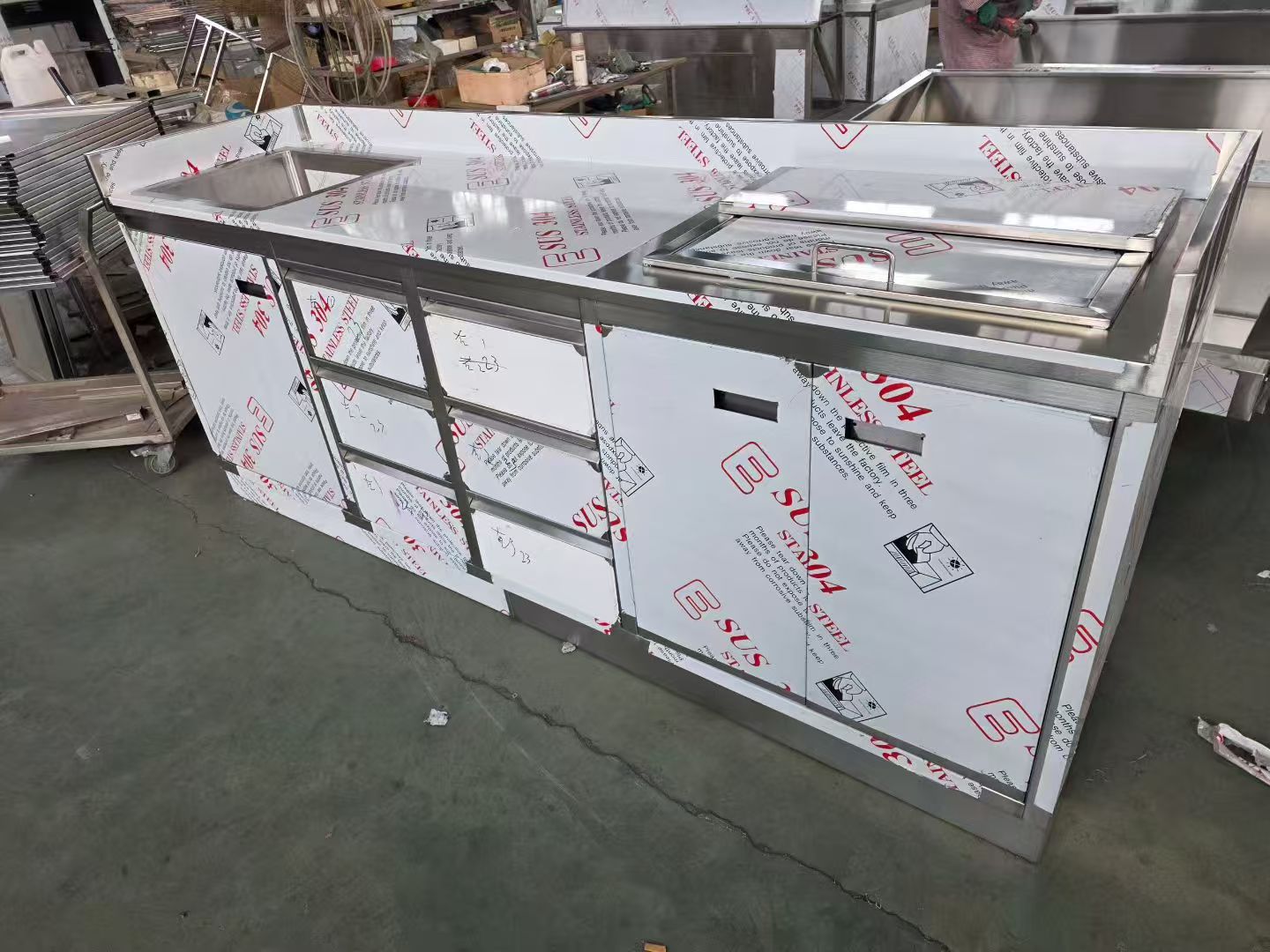
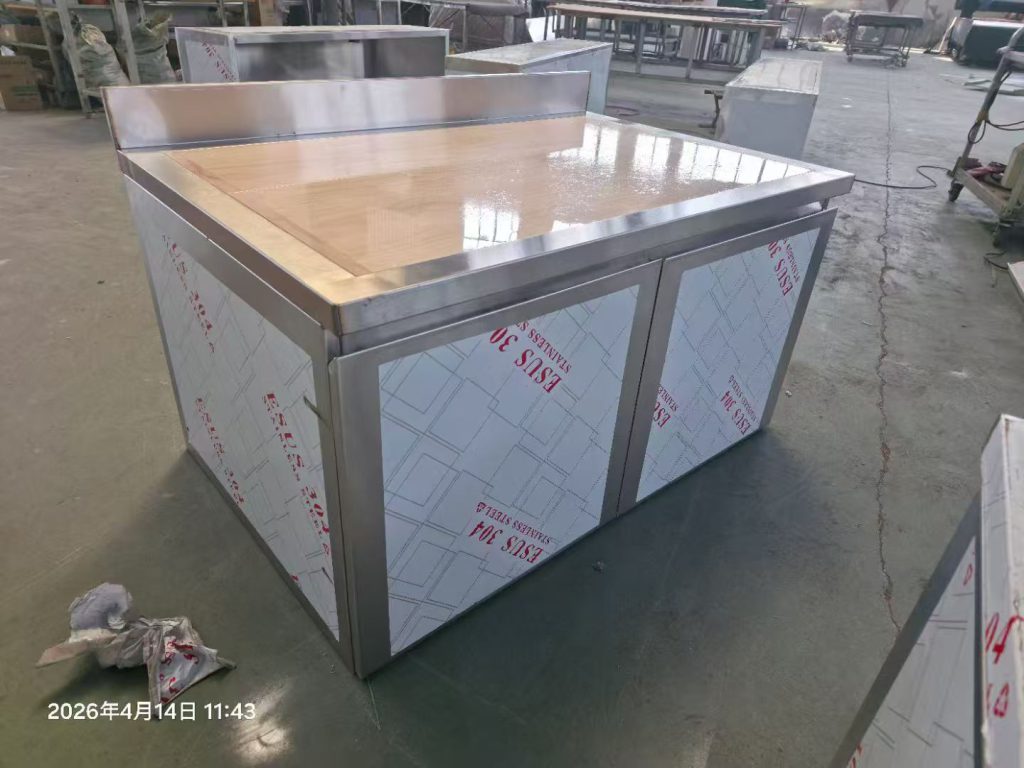
1.2 mm top on a heavy duty frame.
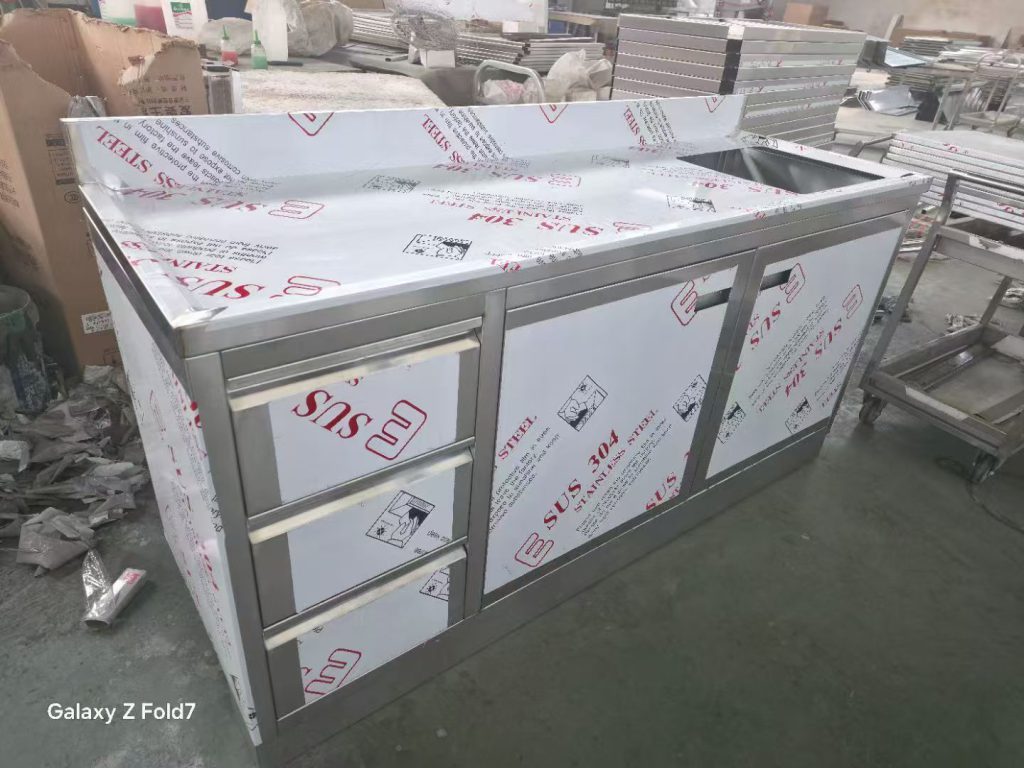
Gauge specified against the duty, not the price.
Choosing the Right Stainless Steel Thickness
The thickness of stainless steel used in commercial kitchen equipment directly affects durability, cost, and performance. Understanding the options helps you make informed purchasing decisions.
Work Table Top Thickness: 1.0mm vs 1.2mm
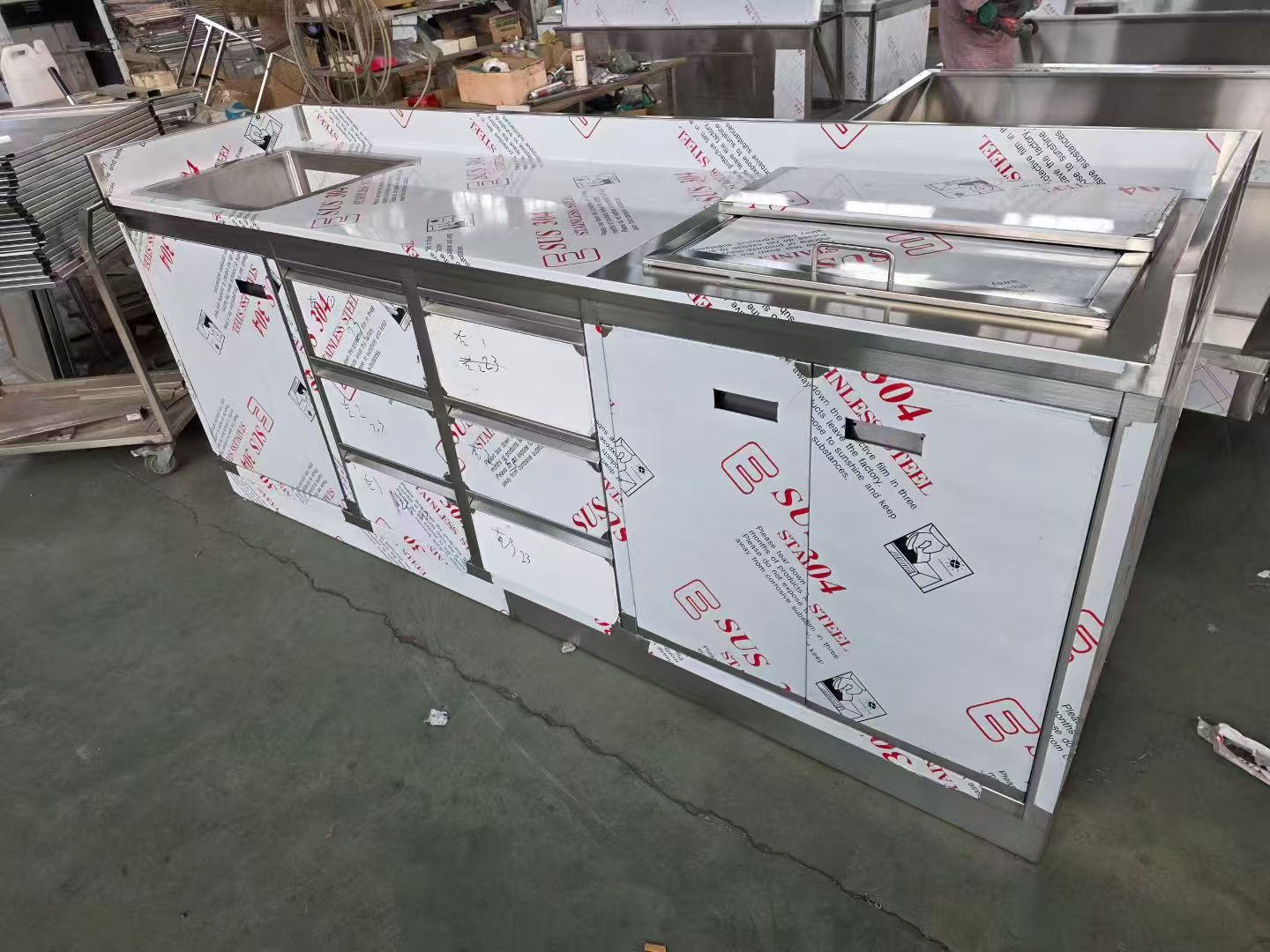
1.0mm (20 gauge): This is the minimum recommended thickness for commercial work table tops. It is suitable for light to medium duty applications such as prep tables, serving counters, and assembly stations. 1.0mm tops are more affordable and easier to fabricate, but they may dent under heavy use.
1.2mm (18 gauge): This is the preferred choice for heavy-duty commercial kitchens. 1.2mm tops resist denting and warping better, making them ideal for baking stations, meat preparation areas, and any surface that will bear heavy loads. The additional cost is typically 10-15% more than 1.0mm, but the increased durability justifies the investment.
A top that already wobbles or flexes under load is usually a gauge-and-frame problem rather than a grade problem – see why prep tables wobble and what gauge thickness actually changes.
Thickness Recommendations by Application
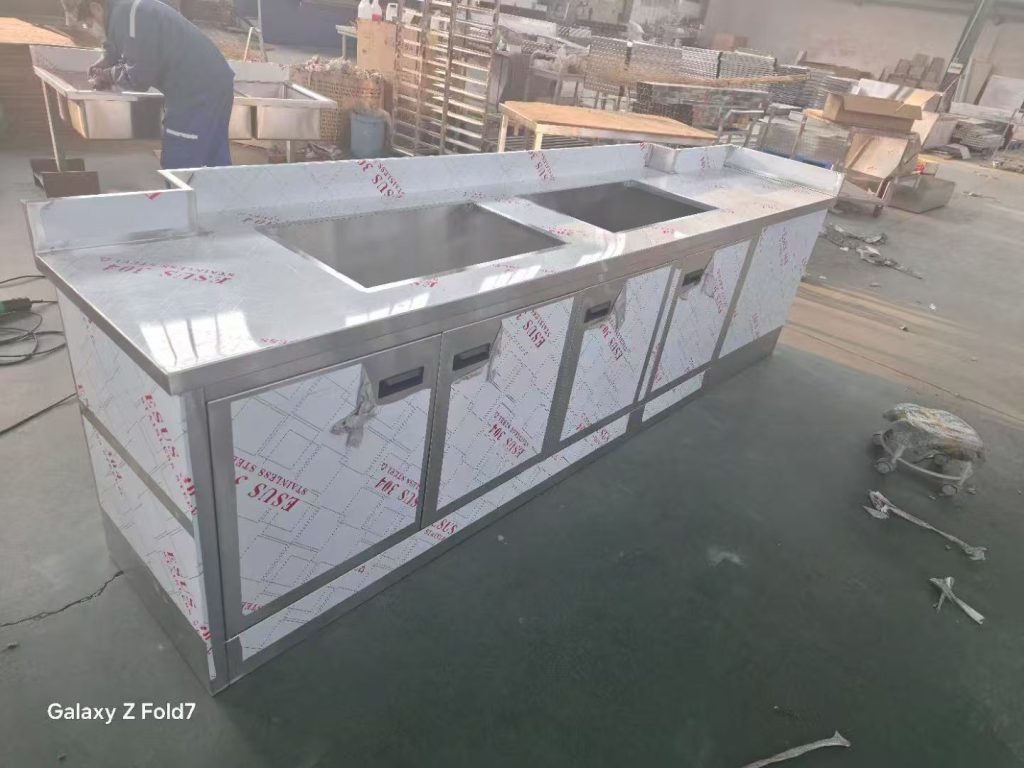 Heavier tops for high-volume preparation areas.
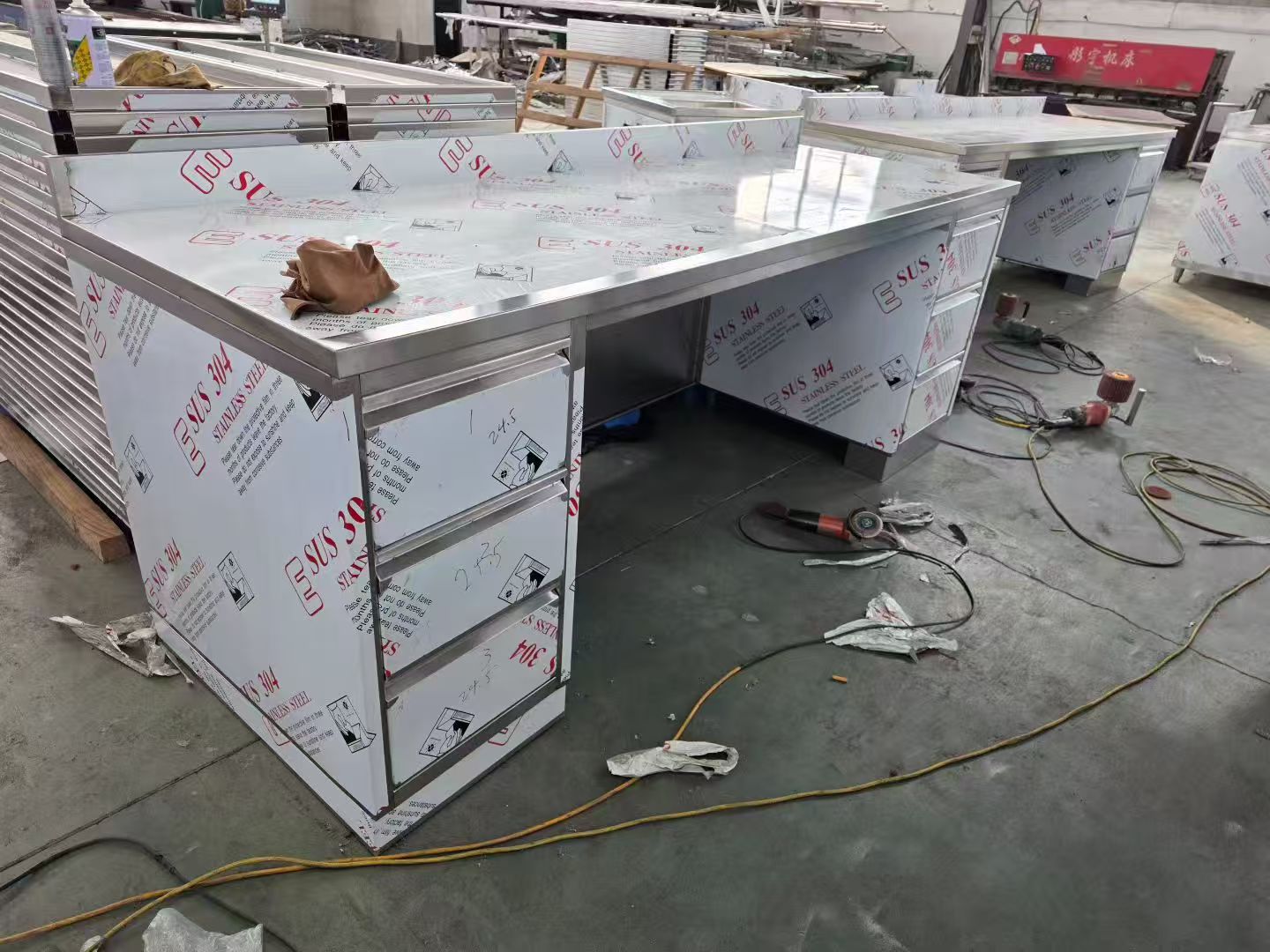
Work table tops: 1.0mm minimum, 1.2mm recommended for heavy use
Sink bowls: 0.8mm to 1.0mm for standard use, 1.2mm for heavy commercial use
Shelving: 0.8mm to 1.0mm for standard shelves, 1.2mm for heavy-duty storage
Equipment frames and legs: 1.2mm to 1.5mm for structural integrity
Range hoods and ventilation: 0.8mm to 1.0mm
National Standards for Commercial Kitchen Stainless Steel
Different countries have established standards for stainless steel used in commercial food service equipment. Key standards include:
China (GB): GB/T 3280 specifies stainless steel plate thickness tolerances. GB 4806.9 covers food contact materials.
United States: NSF/ANSI 2 standard requires 304 stainless steel for food zones in commercial food equipment.
Europe: EN 1.4301 (equivalent to 304) is the standard grade for food contact applications under EU Regulation 1935/2004.
Japan: JIS G4305 specifies SUS304 as the standard food-grade stainless steel.
When purchasing equipment for export, always verify that the stainless steel grade and thickness meet the destination country’s regulatory requirements. Grade and thickness are separate decisions – our guide to stainless steel grades for commercial kitchen equipment covers which grade suits which surface.
Frequently Asked Questions
Is 1.0mm stainless steel thick enough for a commercial work table?
Yes, 1.0mm is the minimum recommended thickness for commercial work table tops and is suitable for light to medium duty applications. For heavy-duty use, 1.2mm is recommended.
What is the difference between 18 gauge and 20 gauge stainless steel?
18 gauge is approximately 1.2mm thick, while 20 gauge is approximately 1.0mm. Lower gauge numbers indicate thicker material. 18 gauge is stronger and more dent-resistant.
Does thicker stainless steel always mean better quality?
Not necessarily. While thicker steel is more durable, the grade of stainless steel (304 vs 201) and the quality of fabrication are equally important factors in overall equipment quality.
What thickness should I choose for a commercial sink?
For commercial sinks, 0.8mm to 1.0mm is standard for most applications. Heavy-duty sinks used in high-volume kitchens should use 1.2mm to prevent denting and extend service life.
Choose Your Equipment and Prepare a Quote Request
Select the equipment you need below. Thickness should be considered together with component dimensions, support and intended use. If you already have a specification, identify which thickness applies to the top, bowl, shelf, frame or other component.
| Type | Details to send |
|---|---|
| Work tables View options |
Share the tabletop dimensions, intended tasks, equipment placed on top, and required undershelf or bracing. |
| Commercial sinks View options |
Share bowl dimensions, number of bowls, drainboard layout, backsplash and plumbing positions. |
| Shelving View options |
Share shelf dimensions, expected loading, number of levels and support arrangement. |
| Custom parts or complete equipment View options |
Send a drawing or dimensioned sketch identifying the thickness required for each component. |
For a quotation, include the equipment type, dimensions, quantity, material grade, specified thickness in mm and delivery country. If thickness has not been specified, describe the intended use and construction requirements. A drawing or dimensioned sketch is helpful; if using the form below, summarize these details in the message or email your drawing to [email protected].
Related Products
Explore our range of stainless steel kitchen equipment:
Related Guides
- Why does my prep table wobble? Gauge thickness explained
- Welding seams and commercial kitchen health inspections
- Food grade stainless steel fabrication
Request a Quote
Fill out the form below and we’ll get back to you within 24 hours with a competitive quote.